Direct Factory Supply • ISO 13485 & CE Certified • Full Customization & SFDA Technical File Support
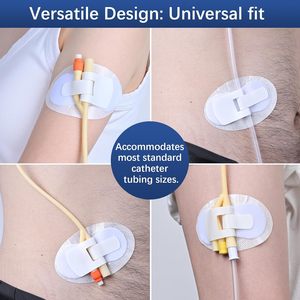
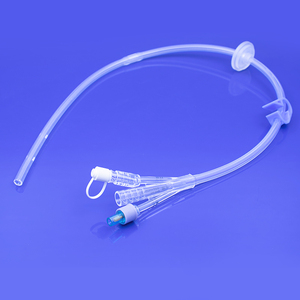
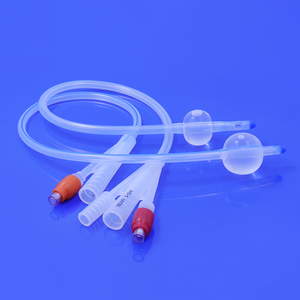
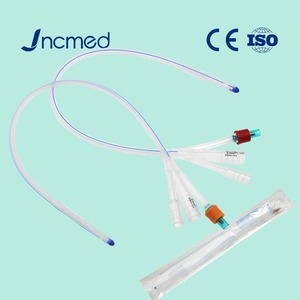
The Kingdom of Saudi Arabia (KSA) is undergoing an unprecedented healthcare transformation driven by Saudi Vision 2030 and the National Transformation Program (NTP). With massive investments directed into expanding hospital bed capacity, specialized surgical centers, and long-term care facilities across Riyadh, Jeddah, Dammam, and NEOM, the demand for single-use medical consumables—specifically urological devices, catheter stabilization systems, infusion lines, and enteral feeding disposables—has scaled exponentially.
However, procuring medical disposables for the Saudi market requires strict alignment with the regulatory benchmarks set by the Saudi Food and Drug Authority (SFDA) and the centralized procurement directives of the National Unified Procurement Company (NUPCO). For Saudi medical distributors, brand owners, and tender bidders, selecting an elite China Contract Development and Manufacturing Organization (CDMO) / Original Equipment Manufacturer (OEM) is no longer just about unit cost reduction. It requires verifying strict cleanroom conditions, material biocompatibility, balloon burst threshold consistency, ETO sterilization validation, and robust supply chain traceability.
As a premier Chinese medical device manufacturer with over three decades of engineering authority, our facility integrates liquid silicone molding, automated extrusion, cleanroom assembly, and complete OEM technical documentation to empower Saudi health organizations with uncompromised quality and seamless market entry.
We supply complete technical dossiers (STED format), ISO 10993 biocompatibility testing, acceleration aging data, and Free Sale Certificates (FSC) for fast Saudi SFDA registration.
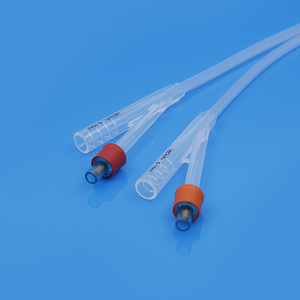
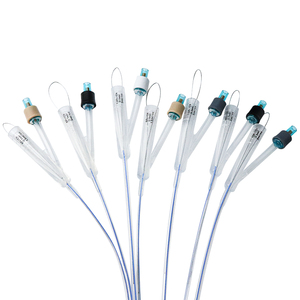
Utilizing high-purity Liquid Silicone Rubber (LSR) offering superior biological inertness, tissue tolerance, and thermal stability in Middle Eastern transit climates.
Smooth, polished eyelets, symmetric balloon expansion, and specialized fixation patches engineered to minimize urethral trauma and hospital-acquired urinary tract infections.
Understanding the unique operational conditions within Saudi Arabian hospitals, specialized clinics, and home healthcare programs is crucial for custom medical device engineering. OEM medical products manufactured in China for the Middle East must withstand distinct environmental and clinical challenges:
Saudi Arabia experiences high ambient outdoor temperatures and extreme aridity, requiring strict climate control during port customs clearance (e.g., Jeddah Islamic Port or King Abdulaziz Port in Dammam) and inside hospital supply depots. Standard latex catheters can degrade rapidly under thermal stress, leading to material embrittlement or balloon rupture. Our 100% Silicone 2-Way and 3-Way Foley Catheters maintain physical flexibility, lumen integrity, and balloon elasticity across extreme temperature fluctuations (tested up to 50°C for accelerated aging), ensuring total safety during storage and clinical deployment.
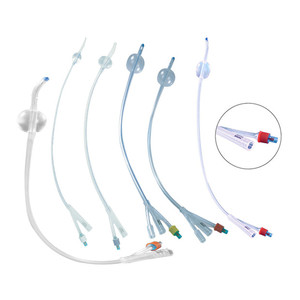
In major medical centers such as King Faisal Specialist Hospital & Research Centre and Ministry of Health (MOH) tertiary facilities, urological surgical procedures require high-flow 3-Way Foley catheters for continuous postoperative irrigation to clear blood clots. Our custom OEM 3-Way catheters feature enlarged irrigation lumens and reinforced non-collapsible walls, preventing lumen collapse under continuous negative suction or high-volume gravity irrigation.
Pediatric urinary retention and congenital urological malformations demand soft, ultra-fine gauge catheters (6Fr to 10Fr) with smooth, atraumatic distal tips. Our precision injection molding ensures that pediatric balloons inflate symmetrically without asymmetric wall deformation, mitigating bladder neck irritation in young patients.
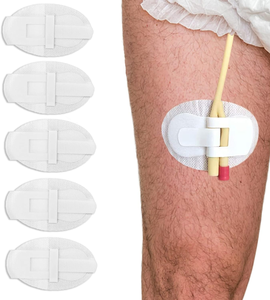
With the Saudi Ministry of Health aggressively expanding home medical care initiatives (Home Healthcare Program), catheter displacement and skin tearing from sub-standard adhesives are major concerns. Our self-adhesive catheter stabilization devices utilize hypoallergenic, breathable medical hydrocolloid/acrylic adhesives designed for sensitive skin, preventing accidental catheter extraction while remaining comfortable in warm climates.
| Performance Parameter | Standard Latex Foley Catheter | Our OEM 100% Liquid Silicone Catheter | Saudi Clinical Impact & Value |
|---|---|---|---|
| Biocompatibility & Cytotoxicity | Risk of latex protein allergy; mucosal irritation over long insertion periods. | 100% Medical Grade Silicone; zero latex proteins; ISO 10993 cytotoxicity passed. | Reduces urethritis and tissue inflammation; ideal for long-term (>30 day) catheterization. |
| Lumen Inner Diameter Ratio | Thicker wall structure; smaller inner drainage lumen for same outer French size. | Thin-wall high-strength extrusion; larger inner lumen for enhanced fluid flow. | Prevents encrustation and lumen blockage from urinary sediments and blood clots. |
| Balloon Symmetry & Retention | Moderate risk of non-uniform inflation and balloon asymmetry. | Concentrically molded balloon wall; 100% inflation symmetry verified per batch. | Prevents catheter slippage, bladder neck irritation, and painful inadvertent extraction. |
| Thermal & Storage Shelf Life | Degrades faster under hot ambient storage; 3-year maximum shelf life. | High thermal resistance; accelerated aging verified for 5-year shelf life in Middle East. | Reduces inventory write-offs for Saudi healthcare distributors and NUPCO stockpiles. |
| Translucency & Inspection | Opaque material; impossible to inspect fluid visual properties inside catheter shaft. | Crystal-clear transparent silicone shaft allowing immediate visual flow checking. | Enables ICU nurses to quickly observe urine color, clarity, hematuria, or sediment. |
Procurement policies in the Kingdom of Saudi Arabia are undergoing a paradigm shift. To successfully win public health contracts through NUPCO or private hospital group tenders (such as Dr. Sulaiman Al Habib Medical Group or Aster DM Healthcare KSA), Chinese manufacturers and Saudi importers must align with three key market trends:
The Saudi FDA requires strict compliance with the Medical Device National Registry (MDNR) and Saudi UDI system regulations. Every medical consumable package must display compliant GS1 barcode formats, clear Arabic and English labeling, storage icons, and sterilization batch numbers. Our artwork production team handles customized packaging layouts, ensuring all box typography and barcode rendering fulfill SFDA requirements prior to shipping.
To streamline clinical workflow and minimize infection risk in operating rooms, Saudi purchasing directors increasingly demand ready-to-use, specialized procedure kits rather than bulk single items. Our factory offers fully integrated kit packing, combining 2-Way/3-Way Foley Catheters, stabilization stickers, lubricating gel syringes, sterile drapes, and urine collection drainage bags into a single, ETO-sterilized blister pack.
Global logistics disruptions have forced Saudi medical distributors to migrate away from multi-tier trading agencies toward direct OEM contract manufacturing factories in China. Partnering directly with our cleanroom production plant eliminates middleman markups, grants direct access to tool design modifications, and guarantees prioritized production slots for tender fulfillment deadlines.
Founded on rigorous engineering practices and strict quality assurance frameworks, our manufacturing facility stands out as a leading contract manufacturing partner for global medical device brands and Middle Eastern importers:
All component feeding, tip polishing, eyelet punching, balloon assembly, and pouch sealing take place inside micro-filtered, positive-pressure cleanrooms to maintain minimal bioburden levels.
Equipped with high-precision CNC equipment and automated liquid silicone injection systems, enabling rapid prototyping and custom lumen development within short turnaround times.
Our captive ETO sterilization plant operates fully validated cycles (ISO 11135), delivering a Sterility Assurance Level (SAL) of 10^-6 while rigorously controlling ETO residual gas levels.
100% of production batches undergo tensile testing, leak testing, balloon burst limit testing, flow rate validation, and physical dimension verification before batch release certificates are signed.
We make medical contract manufacturing seamless, transparent, and compliant. Here is how we transition your product requirements into market-ready sterile medical devices delivered to Saudi ports:
Review client blueprints, required French sizes (Fr/Ch), balloon capacities, and packaging artworks.
Precision prototype molding, dimensional inspection, and rapid sampling for client sign-off and clinical testing.
Issuing FSC, ISO 13485 certificates, testing reports, and technical summaries for Saudi SFDA registration.
Automated LSR extrusion, tip shaping, eyelet cutting, balloon bonding, and primary pouch sealing inside ISO Class 7/8 cleanrooms.
Industrial ETO gas sterilization, residual gas aeration, bioburden testing, and final quality assurance release.
Palletized loading, customized outer export carton packaging, and shipping to Jeddah, Riyadh, or Dammam ports.
We provide complete regulatory support documents required for SFDA registration, including ISO 13485:2016 certificates, CE Certificates of Conformity, Free Sale Certificates (FSC) legalized by relevant authorities, ISO 10993 Biocompatibility Test Reports, ETO Sterilization Validation Reports, and STED technical dossiers.
Our standard OEM private-label MOQ typically starts at 10,000 units per size/SKU for customized primary pouches and Arabic/English printed boxes. For trial orders or clients undergoing initial SFDA market evaluation, we offer flexible production lot arrangements.
Yes. Our artwork design department specializes in multi-lingual packaging. We can print your brand logo, Arabic text translation, instructions for use (IFU), lot numbers, manufacturing dates, and GS1-compliant DataMatrix/UDI barcodes directly onto peelable paper-poly pouches and outer master cartons.
We use 100% high-grade Liquid Silicone Rubber (LSR) which possesses high thermal stability (-40°C to +200°C). Unlike standard latex, our silicone catheters will not melt, become sticky, or lose structural balloon elasticity inside sea shipping containers during Middle Eastern transit.
Standard mass production lead time is approximately 25 to 35 days after artwork sign-off and sample approval. Sea freight from main Chinese ports (Ningbo/Shanghai/Shenzhen) to Jeddah Islamic Port or Dammam Port typically takes 18 to 25 days.
Connect directly with our senior OEM engineering team. We deliver custom samples, technical documentation packages, and factory-direct price quotations within 24 hours.
Contact Us