ISO 13485 & CE certified single-use breathing circuits, heated wire systems, and water trap accessories tailored for clinical anesthesia, ICU ventilation, and home care in Kansai.
In modern critical care and surgical anesthesia, a breathing circuit is far more than a simple flexible conduit; it is an active clinical interface that governs gas dynamics, airway humidity, dead space management, and patient-ventilator synchrony. For hospital procurement managers, biomedical engineers, and medical device importers in Osaka and the broader Kansai region, selecting an established manufacturing partner requires rigorous evaluation of polymer compliance, flow resistance profiles, and mechanical structural integrity under continuous pressure.
Engineered in compliance with strict international benchmarks such as ISO 5367 (Anaesthetic and respiratory equipment — Breathing sets and connectors) and ISO 18562 (Biocompatibility evaluation of breathing gas pathways), single-use breathing circuits are manufactured using distinct polymer formulations tailored for specific clinical applications:
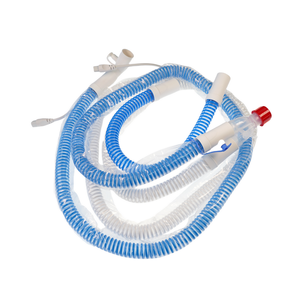
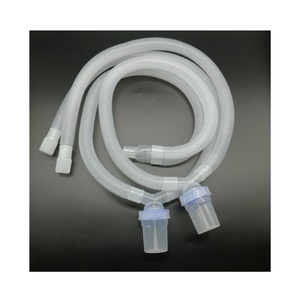
Features a smooth internal lumen combined with an external spiral helical rib. This structural configuration eliminates internal turbulence, dramatically lowers resistance to gas flow, and prevents internal condensation pooling. Smoothbore circuits are highly favored in long-term ICU mechanical ventilation and pediatric critical care where low compliance and precise tidal volume delivery are vital.
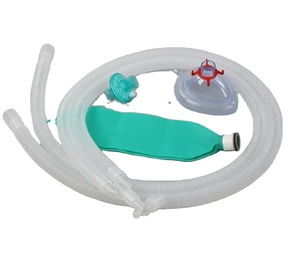
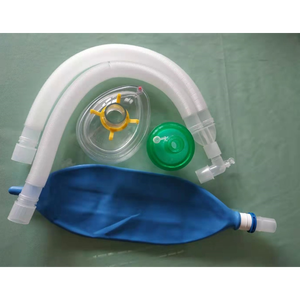
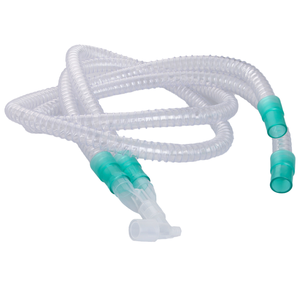
Constructed from memory-form medical-grade Polyvinyl Chloride (PVC) or Polyethylene. Expandable circuits allow clinicians to adjust circuit length dynamically (from 0.4m stored length up to 1.8m or 2.4m extended length). This significantly reduces storage footprint in operating rooms (OR) and operating theatre logistics while minimizing dead space during patient transport.
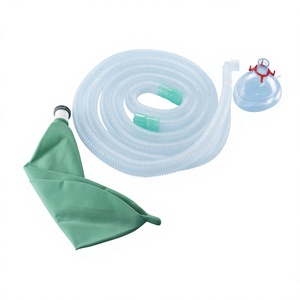
Utilizes a tube-within-a-tube layout (e.g., King's Systems design) where inspired gas flows through the inner lumen and expired gas travels through the outer lumen. This design creates a thermal transfer effect where warm exhaled gases naturally pre-heat incoming cold inspired gases, preserving mucosal moisture in surgical procedures.
Osaka serves as Japan's premier biomedical innovation hub, home to world-renowned medical institutions such as Osaka University Hospital, Kindai University Hospital, and the cutting-edge Nakanoshima Qross international medical center. The Kansai healthcare landscape demands stringent adherence to safety protocols set forth by the Pharmaceuticals and Medical Devices Agency (PMDA) and the Japanese Ministry of Health, Labour and Welfare (MHLW).
Medical device procurement officers and hospital supply networks in Osaka prioritize three macro trends when auditing international breathing circuit manufacturers:
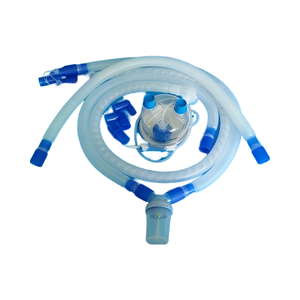
Osaka's humid summer climate and tightly controlled negative/positive pressure ICU environments create micro-climatic challenges inside ventilator tubing. Excessive condensation ("rain-out") in breathing circuits increases the risk of Ventilator-Associated Pneumonia (VAP) and auto-triggering of mechanical ventilators. Modern Osaka ICUs increasingly demand integrated Dual-Heated Wire Breathing Circuits equipped with closed water traps or hydrophobic filter membranes that maintain 100% relative humidity at body temperature without liquid water accumulation.
Aligned with Japanese Industrial Standards (JIS T 7201) and global green procurement guidelines, hospitals across Osaka Prefecture are systematically phasing out plasticized PVC containing DEHP (Di(2-ethylhexyl)phthalate). Manufacturers supplying the Osaka market must provide certified Ethylene Vinyl Acetate (EVA) or TPE (Thermoplastic Elastomer) alternative circuits that prevent chemical leaching during prolonged volatile anesthesia gas exposure (e.g., Sevoflurane, Isoflurane).
Following regional disaster-resilience mandates, medical supply chains in Osaka require reliable OEM/CDMO partners capable of providing standardized 22mm male/female ISO taper connectors, high-burst-pressure tubing, and extended shelf-life ETO-sterilized packaging to support regional stockpiling for emergency acute respiratory management.
To assist biomedical engineering departments and hospital purchasing boards in Osaka, the table below provides a detailed structural and performance comparison of standard breathing circuit configurations:
| Circuit Type | Primary Polymer | Flow Resistance (cmH2O/L/min) | Compliance Rate (mL/cmH2O) | Clinical Environment | VAP Prevention Index |
|---|---|---|---|---|---|
| Smoothbore Heated Wire | Medical Grade EVA / Silicone | < 0.15 at 60 L/min | < 1.0 (Ultra-Low) | ICU Long-Term Ventilation | High (Active Heating) |
| Corrugated with Water Trap | Phthalate-Free Medical PVC | 0.25 at 60 L/min | 1.5 - 2.2 | General Surgical Anesthesia | Moderate (Manual Drainage) |
| Expandable Flexible Circuit | K-Resin / Compact PVC | 0.30 (Extended) | 2.0 - 2.8 | OR / Patient Transport / PACU | Standard Single-Use |
| Coaxial Anesthesia Circuit | Polypropylene & EVA | 0.18 at 60 L/min | < 1.2 | Closed-Circuit Anesthesia | High (Passive Thermal Transfer) |
| Pediatric / Neonatal Circuit | Smoothbore Silicone / EVA | < 0.10 at 30 L/min | < 0.6 (Micro-Tidal) | NICU / Pediatric Critical Care | Very High (Zero Dead Space) |
With over three decades of medical device manufacturing experience (established in 1994), our organization operates state-of-the-art production infrastructure designed to meet the rigorous quality standards expected by Japanese distributors, brand owners, and hospital networks. Unlike simple assembly contractors, our production eco-system is fully vertically integrated under one roof:
All extrusion, injection molding, micro-welding, and automated pouch sealing take place within monitored Class 10,000 cleanrooms. Particulate counts, airflow velocity, and microbial bioburden are continuously controlled to prevent pyrogenic contamination.
We operate an in-house Ethylene Oxide (ETO) sterilizer validated in accordance with ISO 11135. Every production batch undergoes extensive ETO residual testing (ISO 10993-7) to guarantee zero toxic residue on gas-path surfaces prior to release.
We support pharmaceutical companies and medical brand owners with custom line configurations, private-label packaging, multi-language IFUs (Instructions for Use), UDI barcode integration, and specialized 15mm/22mm connector molding.
To de-risk hospital tenders and guarantee flawless bedside reliability, every single breathing circuit design undergoes stringent mechanical and biological testing in our dedicated QA laboratory before batch release:
Our breathing circuits are manufactured under a fully certified ISO 13485 Quality Management System. We provide complete Technical Files, raw material biocompatibility declarations (ISO 10993 and ISO 18562), ETO sterilization validation reports (ISO 11135), and CE mark documentation. These comprehensive dossiers directly support Japanese medical device importers (MAH - Marketing Authorization Holders) during PMDA registration and hospital tender submissions in Osaka and across Japan.
Yes. As a full-service CDMO and OEM manufacturer, we offer complete customization of circuit length (e.g., 1.2m, 1.5m, 1.8m, 2.4m, or custom lengths), heated wire single/dual adaptors compatible with major humidifier brands (Fisher & Paykel, Hamilton, ResMed), customized water trap configurations, and custom color-coded connectors. Packaging can be customized with your brand logo, Japanese-language labeling, UDI barcodes, and specialized box designs.
Standard catalog items have flexible MOQs starting at 1,000 to 3,000 units per SKU. For custom OEM/private-label projects, MOQs are based on standard production lot sizes (typically 5,000 units per configuration). Lead time for standard orders is generally 3 to 4 weeks from order confirmation. We regularly manage ocean freight shipping directly to the Port of Osaka or express air cargo to Kansai International Airport (KIX) with pallet-optimized container loading.
Our heated wire breathing circuits integrate spiral resistance heating wires embedded along the internal wall of the inspiratory (and optionally expiratory) limb. Connected to an automatic humidification controller, the circuit maintains a uniform gas temperature from the humidifier chamber to the patient's airway Y-piece. This uniform thermal gradient prevents moisture cooling and condensation accumulation, keeping breathing gas at optimal relative humidity while protecting mechanical ventilator flow sensors from water damage.
Yes. We manufacture phthalate-free PVC circuits as well as 100% PVC-free Ethylene Vinyl Acetate (EVA) and silicone circuits. These non-leaching material options are specifically engineered for pediatric/neonatal ICUs and sensitive adult patients undergoing prolonged mechanical ventilation, ensuring full compliance with international toxicology standards and Japanese green healthcare mandates.
Whether you are evaluating hospital tender opportunities in Osaka, expanding your medical supply catalog in Kansai, or seeking an experienced OEM/CDMO partner for custom ventilation lines, our engineering team is ready to support your requirements.
Get a Quote