
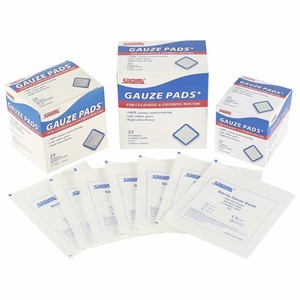
Sterile Gauze Pad Compress Sponge 10x10cm
- 100% Pure USP/EP Cotton
- EO Sterilized, Ready-to-Use
- Folded Edges Prevent Fraying
- Available in 8-Ply, 12-Ply, 16-Ply
Precision-engineered, low-linting, medical-grade absorbent sponges complying with USP Type VII, EN 13795, and ISO 13485 international standards.
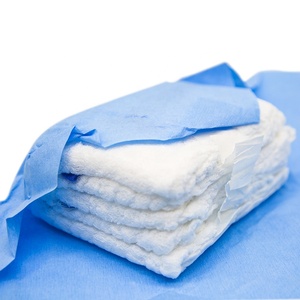
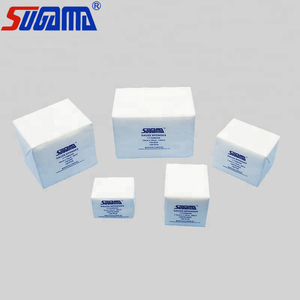
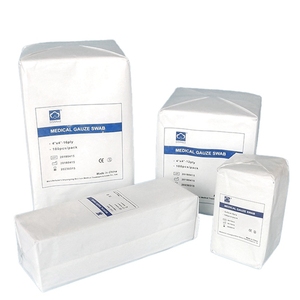
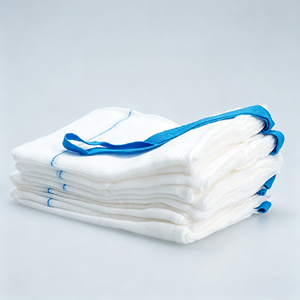
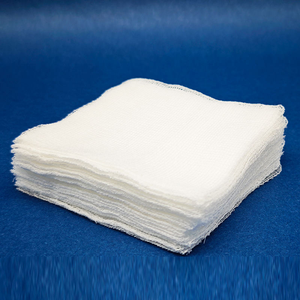
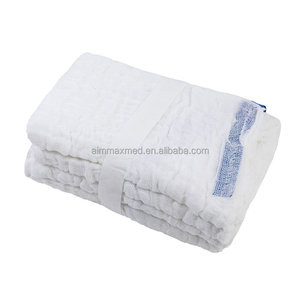
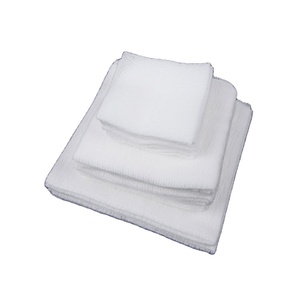
Surgical medical sponges and lap pads represent an indispensable category of operating room disposables. Designed to maintain fluid management, facilitate intraoperative hemostasis, and protect tissue during invasive procedures, the quality of a medical sponge directly correlates with clinical outcomes and patient safety. As a leading medical sponge exporter and certified manufacturer, we engineer surgical disposables that combine high absorbency speed, maximal fluid retention, and negligible lint release.
Modern surgical standards demand stringent raw material sourcing. Our medical sponges are manufactured from 100% long-staple natural cotton, bleached without the use of elemental chlorine to avoid dioxin formation. This raw material purity ensures biostability, high tensile strength, and zero cytotoxicity when in contact with open mucosal surfaces or surgical wounds.
Clinical Insight: Particle shedding and linting during surgical interventions can cause granuloma formation or post-operative adhesions. Standardized machine-folding with tucked edges ensures zero raw threads exposed to the surgical cavity, satisfying EN 13795 particulate requirements.
Selecting the optimal medical sponge requires a deep understanding of yarn mesh counts, ply structure, and radiopaque safety integration. Below is an engineering overview of standard surgical gauze sponge specifications exported worldwide:
| Specification Parameter | USP Type VII Standard | EP (European Pharmacopoeia) | Export Grade Standard |
|---|---|---|---|
| Yarn Count (Warp x Weft) | 20x12, 19x15, or 24x20 threads/cm² | 13, 17, 20 threads/cm² | Customizable (13, 17, 20 Mesh) |
| Fluid Absorption Capacity | > 5x dry weight in 10s | > 6x dry weight in 5s | ≥ 7.5x dry weight in < 3s |
| Sinking Time / Wettability | < 10 seconds | < 10 seconds | < 2.5 seconds |
| Radiopaque Detection | Monofilament or Woven Thread | Monofilament (>60% BaSO4) | Thermoplastic Blue Filament (≥60% BaSO4) |
| Sterilization Route | EO Gas / Gamma Irradiation | EO Gas / Steam / Gamma | Validated EO Cycle (ISO 11135) |
Founded in 1994, our manufacturing infrastructure combines vertical integration with rigorous quality management system (QMS) oversight. Unlike pure trading exporters, our in-house facility in India spans controlled injection molding areas, automated weaving and cutting workshops, an ISO Class 7 (Class 10,000) cleanroom, and a dedicated Ethylene Oxide (ETO) sterilization chamber.
Our Contract Development and Manufacturing Organization (CDMO) and OEM services support international medical brand owners, regional distributors, and government health tenders with bespoke packaging formats, multilingual Instructions for Use (IFU), and Unique Device Identification (UDI) barcoding compliant with US FDA and EU MDR requirements.
In-house weaving looms and automated folding machines eliminate manual contamination risks during production.
Validated ethylene oxide cycles guarantee a Sterility Assurance Level (SAL) of 10^-6 with verified residual aeration.
Batch-level testing for tensile strength, bioburden, fluorescent whitening agents, and absorption kinetics.
As global healthcare systems undergo structural shifts toward value-based care, sustainability, and strict regulatory enforcement, hospital procurement teams and medical importers must adapt their purchasing strategies for medical sponges and gauze products. Over the next decade (2025–2035), key procurement trends will shape the market:
Retained Surgical Items (RSI)—sponges unintentionally left inside patients post-surgery—remain one of the most critical "never events" in operating theatre management. While X-ray detectable barium sulphate filaments are standard, global tenders increasingly mandate embedded RFID tags or matrix codes that integrate with automated operating room counting systems. Top medical sponge exporters are actively upgrading production lines to integrate heat-sealed, biocompatible RFID tags into abdominal lap sponges.
Environmental, Social, and Governance (ESG) criteria are rapidly becoming mandatory in European and North American hospital procurement. Conventional chlorine-bleached cotton is being systematically phased out in favor of Hydrogen Peroxide (H2O2) total chlorine-free (TCF) bleaching process. Additionally, medical exporters are replacing traditional PVC-laminated blister packaging with recyclable, medical-grade paper pouch systems compliant with EN 868 standards.
The transition from MDD to EU MDR (Regulation 2017/745) has significantly raised the barrier to entry for medical sponge exporters. Importers are shunning unverified suppliers lacking comprehensive Clinical Evaluation Reports (CER), bioburden monitoring, and ISO 10993 biocompatibility testing. Tier-1 manufacturers holding direct ISO 13485 certification and robust technical files represent the only viable partners for long-term supply chain resilience.
The material science underlying surgical absorbents is evolving beyond simple cotton weaves. Key innovation tracks include:
Technical, regulatory, and logistics answers compiled by our medical export specialists to streamline your supplier onboarding.
Our manufacturing facility operates under an ISO 13485 certified Quality Management System. Products carry CE marking under European conformity pathways, and selected medical device lines hold US FDA 510(k) clearances. We provide Free Sale Certificates (FSC), ISO 9001 documentation, and complete technical dossiers to support rapid importer registration in Latin America, Europe, Africa, the Middle East, and Southeast Asia.
Minimum order quantities depend on the specific SKU, ply structure, and sterilization format. Generally, standard bulk non-sterile gauze swabs start at 50,000 units, while customized sterile OEM packaging (private label artwork, multi-lingual IFU, custom pouch size) requires one full production lot (typically 20,000 to 30,000 pouches). Our CDMO team works closely with brand owners to optimize lot yields.
Radiopaque threads containing equal to or greater than 60% Barium Sulphate (BaSO4) are either thermally vulcanized onto the gauze surface or directly woven into the fabric weave. Radiopacity is verified batch-by-batch under X-ray fluoroscopy inspection equipment according to ASTM F640 standards, ensuring high contrast visibility during post-operative scanning.
Sterile batches undergo mandatory quarantine and aeration cycles inside controlled heated chambers. Residual Ethylene Oxide (EO) and Ethylene Chlorohydrin (ECH) levels are measured via Gas Chromatography (GC) and strictly maintained below the limits specified in ISO 10993-7 (EO residual < 4 mg/device, ECH < 9 mg/device for prolonged contact devices).
Yes. Our pre-washed sterile abdominal lap sponges undergo a specialized laundering process prior to final packaging and EO sterilization. This process enhances tactile softness, maximizes immediate wicking rate, and removes micro-lint, making them immediately ready for high-fluid surgical environments.
Whether you require tender-ready bulk supply, custom OEM private labeling, or technical registration documentation, our export engineers are ready to assist.
Contact Us