CE and ISO 13485 certified medical disposables engineered for clinical efficacy, bacterial barrier integrity, and patient safety.
An in-depth technical analysis on mitigating Catheter-Associated Urinary Tract Infections (CAUTI), polymer biocompatibility, and manufacturing validation.
In clinical urology, Catheter-Associated Urinary Tract Infections (CAUTI) represent over 30% of all hospital-acquired infections. Leading OEM manufacturers in China have overhauled conventional open-drainage designs in favor of closed-loop hydrodynamic matrices. Incorporating flutter non-return valves (NRV) alongside hydrophobic bacterial air vents (0.2-micron PTFE membranes) creates an absolute physical barrier. This architecture prevents retrograde urine flow and microbial ascending colonization, maintaining sterile fluid dynamics even during patient transfer or positioning changes.
Regulatory frameworks such as EU MDR 2017/745 and US FDA guidance mandate the elimination of toxic phthalate plasticizers like DEHP. Modern medical drainage bag manufacturing utilizes non-DEHP plasticized PVC, Thermoplastic Polyurethanes (TPU), and 100% platinum-cured liquid silicone elastomers. These advanced polymers ensure zero chemical leaching into fluid pathways, maintain flexible kink-resistance under sub-zero or high-humidity shipping conditions, and deliver optimal biocompatibility per ISO 10993 testing standards.
Inside China's top-tier medical device production facilities: How continuous automation guarantees regulatory compliance and product integrity.
Precise thermal and high-frequency dielectric welding tech seals bag perimeter seams under controlled pressure matrixes. This guarantees a minimum tensile burst strength exceeding 50 kPa, completely eliminating seam rupture hazards during heavy volume fluid accumulation up to 2000ml or 4000ml capacity.
All component injection molding, extrusion of kink-resistant tubing, valve fitting, and primary pouch sealing take place inside ISO Class 7 (Class 10,000) cleanrooms. Airborne particulate monitoring, micro-biological bioburden testing, and strict gowning protocols ensure pristine initial purity.
Equipped with captive 100% Ethylene Oxide (ETO) sterilizers validated in strict compliance with ISO 11135 standards. Automated degassing cycles reduce chemical residual levels below 10 ppm, far exceeding stringent international safety thresholds for long-term clinical contact.
Quantitative evaluation of medical-grade raw materials utilized across urological drainage bags and catheters.
| Polymer Material Type | Tensile Strength (MPa) | DEHP Leaching Risk | Biocompatibility Standard | Primary Clinical Application | Optimal Duration |
|---|---|---|---|---|---|
| Medical-Grade Plasticized PVC | 18 - 22 MPa | Zero (Non-DEHP Plasticizer) | ISO 10993-5 / 10993-10 | Standard Hospital Drainage Bags, Urinemeters | Short-Term (< 7 Days) |
| Thermoplastic Polyurethane (TPU) | 35 - 50 MPa | Absolute Zero (Phthalate-Free) | ISO 10993 Certified / USP Class VI | High-Durability Leg Bags, ICU Precision Urinemeters | Medium-Term (< 30 Days) |
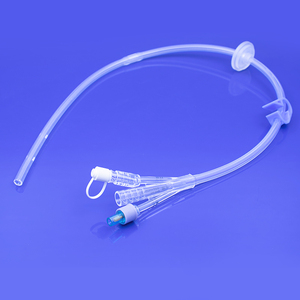
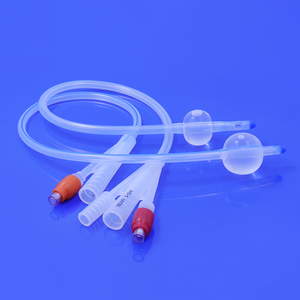
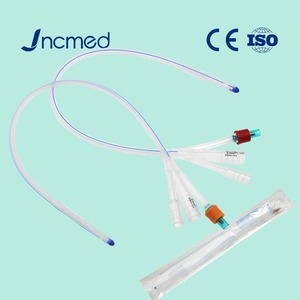
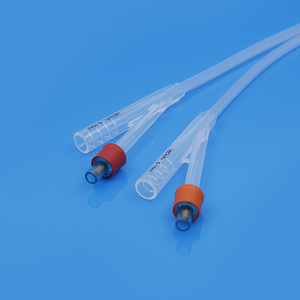
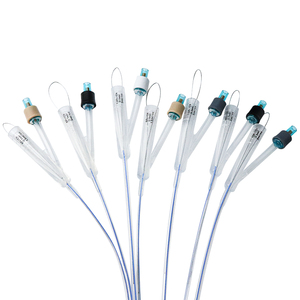
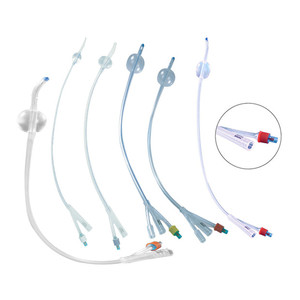
| 100% Platinum-Cured Silicone | 8 - 12 MPa | Absolute Zero (Inert Elastomer) | ISO 10993 Cytotoxicity Approved | Pediatric & Adult Foley Catheters (2-Way/3-Way) | Long-Term (Up to 30 Days) |
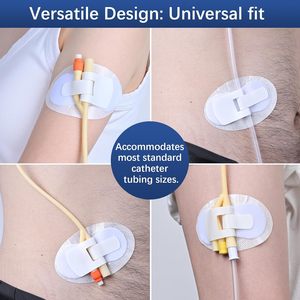
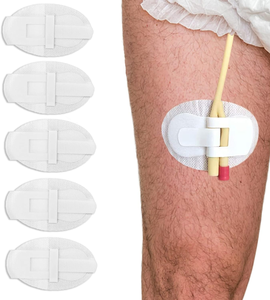
| Skin-Friendly Hydrocolloid / Acrylic | N/A (Adhesion > 15N/m) | Hypoallergenic Matrix | ISO 10993 Skin Irritation Pass | Catheter Stabilization Devices & Securment Stickers | Change every 3 - 5 Days |
Strategic insights for medical supply chain executives, global distributors, and hospital procurement boards.
The global urology landscape is transitioning toward digital urine output monitoring. Future-ready factories in China are embedding micro-electronic sensors and optical fluid meters directly into the drainage chamber. These smart closed systems communicate wirelessly with intensive care unit (ICU) central monitors, alerting nursing staff to acute kidney injury (AKI) indicators and real-time volumetric fluctuations without opening the sterile circuit.
Over 60% of international medical buyers are restructuring their vendor matrices to ensure strict compliance with EU MDR 2017/745 Class Is/IIa certification. Sourcing departments now require full technical dossiers (STED), Unique Device Identification (UDI) barcoding, bio-degradable pouch packaging options, and audited eco-friendly manufacturing plants equipped with solar thermal arrays and closed-loop solvent recovery systems.
Rather than purchasing off-the-shelf standard commodities, tier-one medical brand owners are partnering directly with vertically integrated Chinese manufacturers. Direct engineering collaboration enables customized tube lengths, needle-free dual-sampling ports, anti-kink spring reinforcements, and tailored multi-lingual IFU (Instructions for Use) packaging, drastically accelerating time-to-market across 50+ destination countries.
Procurement bids are increasingly requiring pre-connected, all-in-one catheterization trays. Combining 100% silicone Foley catheters with pre-attached anti-reflux urine drainage bags and securement stabilization devices minimizes connection handling steps during clinical insertion. This bundled design eliminates procedural contamination risks and reduces overall hospital supply management overhead.
Core operational strengths built over three decades of medical device manufacturing for global healthcare systems.
From internal tool-and-die room design, automated injection molding of valves and connectors, precision tubing extrusion, to high-frequency sealing—100% of critical manufacturing processes are retained under one roof. No outsourced sub-assemblies, ensuring complete supply chain transparency.
We supply complete regulatory dossier documentation to support our partners' local market registrations. Our export compliance office provides Free Sale Certificates (FSC), ISO 13485 quality certificates, CE conformity files, biocompatibility test reports, and ETO sterilisation validation data.
Serving over 52 countries across Europe, Latin America, the Middle East, and Asia. Our logistics team handles custom carton compression, palletized container loading optimization, barcode labeling compliance, and flexible shipping terms (FOB, CIF, CFR, DDP) to reduce landed unit costs.
Direct technical answers regarding quality control, minimum order quantities, and custom contract manufacturing.
Every single drainage bag undergoes automated continuous pressure decay testing and visual high-definition camera inspection before moving to pouch packaging. High-frequency dielectric perimeter welds are tested against internal burst pressures exceeding 50 kPa, guaranteeing seam integrity under maximum fill capacity.
Standard factory SKUs carry an MOQ of 10,000 units. For customized OEM artwork, private label pouches, unique graduations, or specialized tube lengths, the typical MOQ starts at 20,000 units per specification. Standard production lead time is 25–35 days post sample approval and deposit confirmation.
Our drainage bags integrate a dual-barrier protection system: a mechanical anti-reflux flutter valve that blocks retrograde fluid flow back into the patient's bladder, paired with a 0.2-micron hydrophobic air vent filter that equalizes internal bag pressure without allowing bacterial ingress from ambient air.
Yes. All raw material batches—including non-DEHP plasticized PVC, medical-grade TPU, and 100% silicone elastomers—are 100% latex-free and DEHP-free. Chemical analysis reports and ISO 10993 biocompatibility certificates are provided with every contract production lot.
Products are sterilized via industrial Ethylene Oxide (ETO) chambers validated according to EN ISO 11135 standards. We supply Biological Indicator (BI) test results, ETO gas residual report summaries (< 10 ppm), and sterility assurance level (SAL 10^-6) certificates for all shipments.
Connect directly with our senior engineering and medical export team. We provide sample packs, detailed technical drawings, competitive bulk pricing, and full factory audit access.
Contact Us