Explore our range of precision-molded, medical-grade polyurethane and silicone catheters, stabilization devices, and urological sets produced under strict cleanroom conditions.
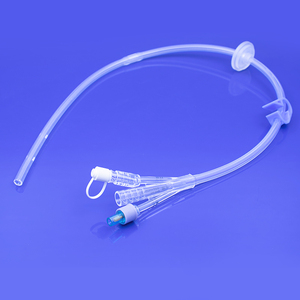
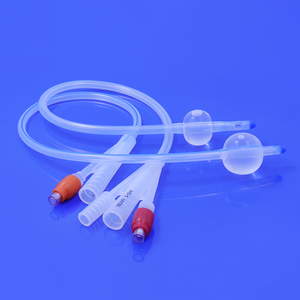
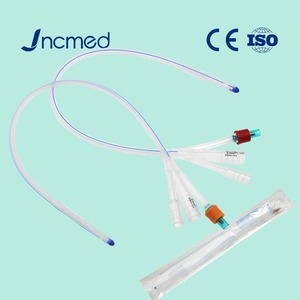
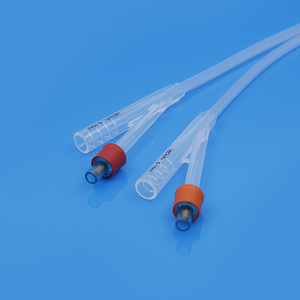
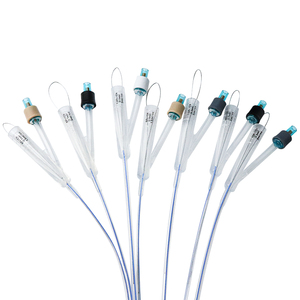
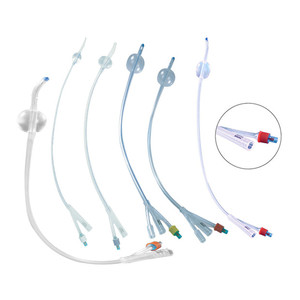
In modern clinical anesthesia and post-operative analgesia, the epidural catheter remains a critical single-use medical device demanding absolute structural fidelity, biological safety, and mechanical reliability. As a primary global exporter and CDMO (Contract Development and Manufacturing Organization) operating state-of-the-art injection molding and micro-extrusion facilities, our organization bridges the gap between complex polymer engineering and clinical efficacy.
Founded in 1994, our manufacturing footprint operates under an established ISO 13485 quality management system. Unlike conventional supply chain intermediaries, our integrated factory model handles all core operations under a single controlled roof: precision mold tooling, micro-coextrusion of radiopaque lines, thermal tip forming, ultrasonic welding, Luer-lock assembly, packaging, and in-house Ethylene Oxide (ETO) sterilization.
Procurement directors and brand owners require audited transparency. By eliminating third-party sub-assembly dependency, our cleanroom infrastructure guarantees strict adherence to dimensional tolerances, zero-defect insertion rates, and full batch traceability from raw resin lot to sterile barrier pouch.

Epidural catheters must navigate the epidural space smoothly without coiling, breaking, or kinking under anatomical compression. Our OEM designs incorporate custom polymer formulations—utilizing premium Polyether Block Amide (PEBAX), Medical-Grade Polyurethane (PUR), and Nylon-12—to achieve the perfect equilibrium between proximal column strength for pushability and distal tip softness to prevent dural puncture.
For demanding clinical requirements, we manufacture wire coil-reinforced epidural catheters. A stainless-steel or nitinol inner coil encased within the polymer sheath provides maximum kink resistance, lumen integrity under flexure, and tactile responsiveness during Tuohy needle placement.
Accurate placement verification under fluoroscopy or X-ray imaging is non-negotiable in pain management procedures. Our micro-extrusion lines co-extrude continuous Barium Sulfate (BaSO4) or Bismuth Subcarbonate stripes into the catheter wall, guaranteeing 360-degree X-ray opacity without compromising structural smoothness.
Furthermore, high-precision laser marking systems imprint indelible, non-toxic depth lines along the catheter shaft (typically every 1 cm from 5 cm to 20 cm). This allows anesthesiologists to determine exact insertion depth with absolute clarity.
As global healthcare systems undergo rapid structural shifts, B2B medical buyers, government health ministries, and OEM distributors are re-evaluating their sourcing criteria for anesthesia disposables. Strategic procurement in 2026 and beyond focuses on five pivotal trends:
Global regulatory bodies (EU MDR, US FDA) are penalizing phthalate-leaching plastics (DEHP/PVC). Procurement is pivoting heavily toward medical-grade Polyurethane (PUR) and PEBAX resins that offer superior tissue biocompatibility, lower chemical leaching risk, and resistance to drug absorption.
Hospitals are shifting away from sourcing individual components. Purchasing contracts increasingly specify single-use, turn-key Epidural Trays containing Tuohy needles, epidural catheters, Loss-of-Resistance (LOR) syringes, epidural filters (0.22 micron), and self-adhesive securement devices.
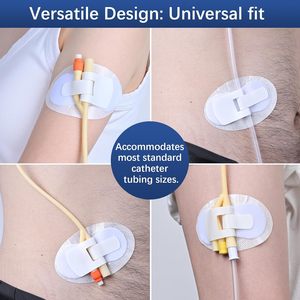
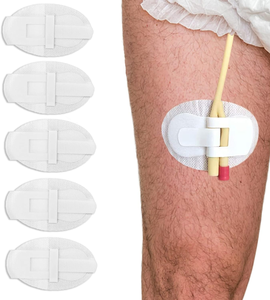
Post-procedural catheter migration remains a leading cause of analgesic failure and secondary complications. Hospital tenders now mandate dedicated engineered stabilization devices (like self-adhesive leg holders and epidural lock pads) included directly within catheter kits.
Geopolitical tensions and logistics bottlenecks have forced brand owners to partner directly with high-capacity CDMO manufacturers capable of offering multi-tier raw material sourcing, automated packaging lines, and dedicated ETO sterilization capacity.
Traceability is paramount. Overseas buyers now require Unique Device Identification (UDI) GS1 barcoding printed on every blister pack and secondary box, supported by full bioburden, stability, and ETO residual validation data.
Medical device engineering is constantly evolving to elevate patient comfort and lower clinical risks. Our R&D department actively integrates the following product developments into our custom OEM and private-label manufacturing projects:
Traditional open-ended catheters carry a higher risk of tissue trauma or inadvertent vascular cannulation. Modern manufacturing shifts toward closed-tip designs with multi-side eyes (3 lateral micro-orifices positioned at 120-degree offsets). This configuration optimizes regional anesthetic diffusion throughout the epidural space while eliminating the sharp edge profile during catheter advancement.
Long-term epidural catheterization for chronic pain management or post-surgical analgesia increases the risk of bacterial colonization along the catheter tract. Next-generation OEM designs utilize hydrophobic-to-hydrophilic lubricious coatings to diminish insertion resistance, alongside embedded silver-nanoparticle or chlorhexidine antimicrobial matrices to inhibit bio-film formation.
A common point of failure during regional anesthesia is disconnection or leaking at the catheter-to-syringe interface. Our custom OEM lines feature click-lock, tool-free snap adapters that grip the proximal end of 16G to 20G catheters securely without crushing the internal lumen. Paired with flat 0.22µm epidural particulate/bacterial filters, clinicians achieve a pressure-tested, leak-proof fluid pathway.
Essential answers for hospital procurement specialists, medical device distributors, and private-label brand partners.
Whether you require private-label epidural catheters, custom catheter securement devices, or complete regional anesthesia procedure trays, our engineering and export team is ready to analyze your technical specifications.
Inquire Now