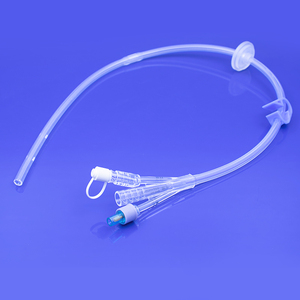
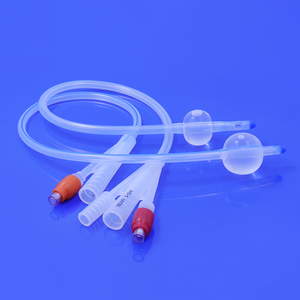
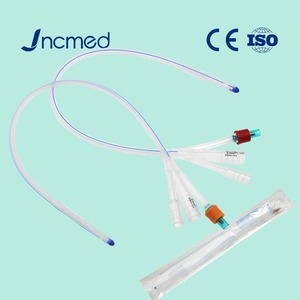
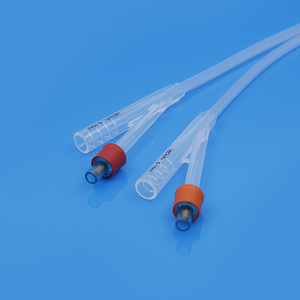
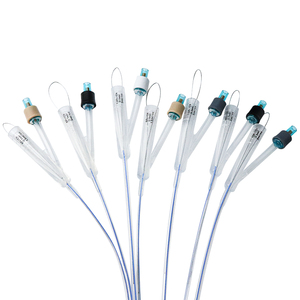
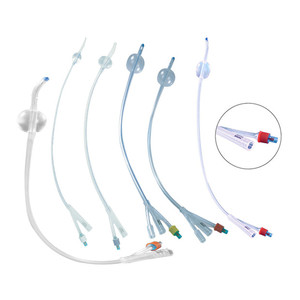
Explore our certified range of clinical-grade urinary and hemodialysis catheter solutions engineered for acute and long-term medical applications.
In the realm of advanced renal replacement therapy (RRT) and extracorporeal blood purification, hemodialysis catheters represent critical vascular access points. As a premier Custom OEM Dialysis Catheter Factory and Global Exporters, Angiplast Private Limited (established in 1994) operates at the convergence of advanced polymer science, precision extrusion engineering, and strict international regulatory compliance. Hemodialysis catheters—spanning short-term non-tunneled central venous catheters (CVCs) and long-term tunneled cuff catheters—demand uncompromising structural integrity, biostability, and optimal blood flow hydrodynamics to mitigate risks of thrombosis, vascular trauma, and catheter-related bloodstream infections (CRBSIs).
Modern clinical procurement teams, medical device brand owners, and healthcare distributors face evolving challenges: balancing high flow rates (>350-400 mL/min) at lower arterial pressures, eliminating blood recirculation coefficients, and adhering to strict international standards such as ISO 10555-1 and ISO 10555-3. This paper examines the critical technical parameters, global procurement trends, surface modification technologies, and OEM contract manufacturing methodologies driving next-generation hemodialysis and urinary catheter systems.
Core Engineering Insight: Optimal catheter performance requires a precise balance between shore hardness during insertion and body-temperature softening to minimize vessel wall erosion. Our custom medical-grade Thermoplastic Polyurethane (TPU) and Liquid Silicone Rubber (LSR) formulations deliver dynamic durometer transitions once deployed in vivo.
Our OEM manufacturing facility leverages state-of-the-art co-extrusion technology to deliver custom lumen geometries (Double-D, Coaxial, and Side-by-Side configurations). Essential biomaterial properties include:
Operating out of Ahmedabad, India, Angiplast Private Limited spans three decades of dedicated healthcare extrusion and injection moulding excellence. Unlike contract packaging operations, our manufacturing footprint is fully integrated across all critical process steps, providing complete supply chain transparency and lot-level traceability from raw resin to sterile packaging.
In-house toolmakers engineered for rapid prototyping, multi-cavity precision moulding of catheter hubs, luer locks, line clamps, and pediatric connectors.
Climate-controlled, particulate-monitored environments for precision catheter tip forming, RF welding, side-hole punching, and primary pouch sealing.
Captive Ethylene Oxide (ETO) sterilizers with automated environmental aeration chambers validating low residual limits per ISO 11135 and ISO 10993-7.
Full QMS compliance guaranteeing complete lot traceability, biological risk assessments, bioburden monitoring, and tensile strength release testing.
Our commitment to Information Gain and E-E-A-T (Experience, Expertise, Authoritativeness, Trustworthiness) ensures that every customer partnering with us receives comprehensive technical dossiers (STED), bio-compatibility reports (ISO 10993 series), and validated shelf-life stability data designed to pass regulatory scrutiny across US FDA 510(k), European CE MDR 2017/745, and Latin American ANVISA pathways.
The global market for hemodialysis catheters, vascular access kits, and urinary catheters is undergoing structural shifts driven by changing chronic kidney disease (CKD) patient demographics, stringent infection control metrics, and a push toward sustainable healthcare supply chains. Global medical device buyers must navigate several key procurement mega-trends:
Hospital-acquired infections (HAIs) and central line-associated bloodstream infections (CLABSIs) present significant financial burdens to healthcare systems worldwide. Future sourcing contracts increasingly mandate active antimicrobial protection. OEM custom requests are shifting toward catheters integrated with silver nanoparticles, chlorhexidine-sulfadiazine coatings, or rifampin-minocycline impregnations designed to inhibit bacterial colonization along both internal lumina and external catheter tracts.
The transition from the European Medical Device Directive (MDD) to Medical Device Regulation (MDR 2017/745) has elevated hemodialysis and invasive vascular access disposables to higher risk classes. Global distributors now require contract manufacturers to supply comprehensive technical master files, clinical evaluation reports (CER), post-market clinical follow-up (PMCF) framework support, and Unique Device Identification (UDI) compliance (GS1 barcode standards).
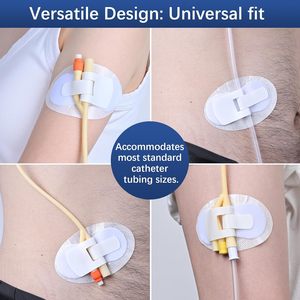
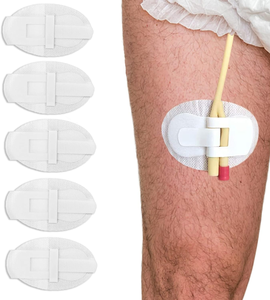
Procurement departments in North America, Europe, and the Middle East are phasing out standalone catheter purchasing in favor of standardized, turn-key procedural kits. These sets integrate the primary catheter with Huber needles, nitinol guidewires, dilators, valved tear-away sheaths, safety scalpels, skin staple closure systems, and adhesive leg stabilization stickers (such as those in our primary product offerings).
To guard against single-region supply disruptions, major pharmaceutical brands are expanding contract manufacturing (CDMO) arrangements with established Indian manufacturers. Leveraging competitive cost structures alongside mature ISO 13485 quality systems, importers achieve cost optimization without sacrificing medical-grade precision.
Innovation in catheter manufacturing focuses on resolving two historic challenges in hemodialysis therapy: catheter thrombosis and vascular wall suction. Next-generation custom OEM development at our facility centers around the following engineering advances:
| Design Feature | Legacy Catheter Architecture | Next-Gen OEM Engineering (Angiplast Standard) | Clinical Benefit |
|---|---|---|---|
| Tip Configuration | Straight Step-Tip / Standard Side Holes | Symmetric Stepless / Split-Tip Design | Reduces arterial recirculation <2%; eliminates wall positional occlusion. |
| Lumen Geometry | Standard Dual-Round Lumens | Asymmetric Double-D & Oval Cross-Sections | Maximizes internal cross-sectional area; delivers flow >450 mL/min at lower venous pressure. |
| Polymer Matrix | Rigid PVC or Standard Silicone | Aromatic Thermoplastic Polyurethane (TPU) | Superior chemical resistance to alcohol/chlorhexidine; body-temperature softening mechanism. |
| Surface Modification | Uncoated Polymer Surface | Hydrophilic & Antithrombogenic Grafting | Inhibits protein adsorption, reducing early thrombus formation and fibrin sheath growth. |
| Hub Construction | Glued Component Hubs | Insert Over-Moulded Seamless Hubs | Eliminates micro-leak pathways; withstands tensile pull forces exceeding ISO 10555 standards. |
Our facility utilizes high-precision single and multi-screw extrusion lines with automated laser diameter monitoring systems. This guarantees wall thickness tolerances down to ±0.02mm across complex 2-Way, 3-Way, and 4-Way extrusion profiles. By incorporating radiopaque stripes or full radiopaque walls via co-extrusion, clinicians gain precise anatomical visualization without compromising catheter mechanical tensile properties.
Catheter-induced vessel trauma is frequently linked to rough distal tip contours or sharp side-hole margins. We utilize thermal radiofrequency (RF) tipping technology to form ultra-smooth, tapered, atraumatic distal tips. Side holes (eyelets) are flame-polished or precision die-cut to eliminate micro-burrs, preventing hemolysis and clot nidus development.
Our minimum order quantities (MOQs) depend on the degree of customization required. For standard private-label branding on our existing CE-marked catheter families, MOQs typically start at 1,000 to 3,000 units per SKU. For custom polymer compounding, non-standard lumen dimensions, or proprietary hub mould creation, MOQs are aligned with one complete extrusion resin lot (generally 5,000 to 10,000 units). Contact our engineering team for customized pilot-scale runs.
Yes. As a global exporter supplying over 52 countries, we provide comprehensive technical documentation packs. This includes ISO 13485 QMS certificates, CE Mark certificates, Free Sale Certificates (FSC), ISO 10993 biocompatibility test summaries, ETO sterilisation residual validation reports, real-time stability data, and STED (Summary Technical Documentation) format files to streamline your local drug and medical device authority registration.
We work primarily with medical-grade thermoset silicone (100% platinum-cured liquid silicone rubber) and biocompatible medical-grade thermoplastic polyurethanes (TPU/Carbothane™/Pellethane™). All raw materials are sourced from leading global chemical suppliers, compliant with USP Class VI, ISO 10993 standards, and free of DEHP, phthalates, and latex.
Every packaging batch undergoes sterilisation in our captive Ethylene Oxide (ETO) plant following ISO 11135 validated half-cycle and full-cycle parameters. We utilize biological indicators (Bacillus atrophaeus) in every load, perform bioburden testing prior to sterilisation, and execute post-sterilisation ETO/ECH residual gas chromatography analysis to guarantee sterility assurance levels (SAL) of 10^-6.
We provide complete OEM procedural assembly. Importers can combine catheters with customized accessories such as adhesive leg bag holders, catheter securement devices, Huber needles, nitinol guidewires, introducer needles, dilators, extension lines with injection caps, scalpels, gauze swabs, and custom printed sterile tray packaging.
Elevate your medical product portfolio with custom extruded catheter designs, validated ISO 13485 cleanroom assembly, and competitive Indian export manufacturing. Request technical consultation, engineering samples, or a custom price quote today.
Get a Quote