Standard-compliant safety engineered devices featuring passive shielding, active retractable mechanisms, ultra-thin wall needle cannulas, and EO sterilization for worldwide clinical applications.
Needlestick injuries (NSIs) represent one of the most critical occupational hazards faced by healthcare professionals globally. According to data from the World Health Organization (WHO) and the Centers for Disease Control and Prevention (CDC), over 3 million healthcare workers experience percutaneous injuries with sharp medical devices annually. The systemic transition toward mandating safety-engineered devices (SEDs) has evolved from a regulatory recommendation into a strictly enforced legal mandate across North America, the European Union (EU Directive 2010/32/EU), and rapidly expanding medical markets across Latin America, Asia-Pacific, and the Middle East.
As a leading China wholesale safety needle exporter and OEM contract manufacturer, our engineering philosophy integrates fail-safe ergonomics, passive locking mechanisms, and ultra-thin wall cannula technology. Modern clinical environments demand devices that guarantee zero exposure to contaminated sharps post-procedure without introducing complex operational steps for clinicians. By consolidating high-speed automated assembly, cleanroom injection moulding, and chemical siliconization within certified facilities, established exporters deliver cost-optimized safety solutions that substantially reduce hospital-acquired bloodborne pathogen transmission risks (including HBV, HCV, and HIV).
Fully compliant with EU MDR 2017/745 Class IIa/IIb standards and OSHA Needle Safety and Prevention Act requirements. Designed for instant shielding post-injection.
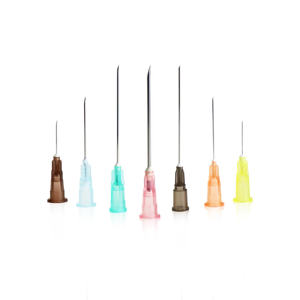
Tri-bevel needle tips treated with medical-grade silicone lubricants to minimize penetration force, reduce tissue damage, and maximize patient comfort.
Tactile click feedback and transparent safety shields allow healthcare providers to visually confirm permanent locking prior to biohazard disposal.
Precision manufacturing in medical disposables requires custom engineering approaches for distinct medical procedures. Below is an authoritative technical overview of our key safety needle lines produced for international distributors and hospital tenders.
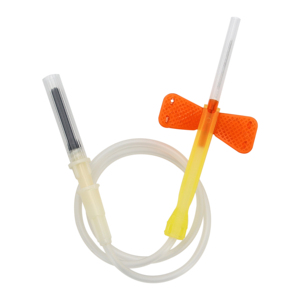
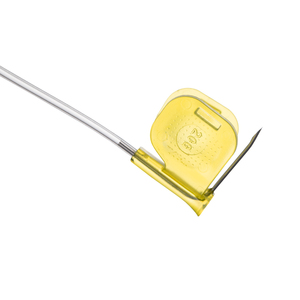
Designed for venipuncture and multi-sample blood collection, retractable safety needles utilize an internal spring mechanism or flip-shield barrier. Upon completing blood draw, the clinician activates the mechanism using single-hand technique, permanently pulling the needle cannula into a rigid outer housing.
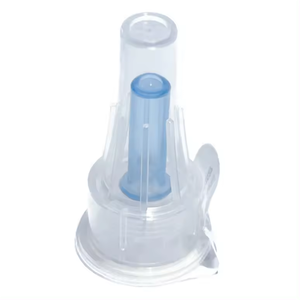
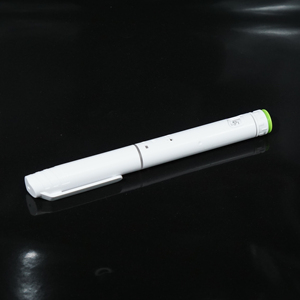
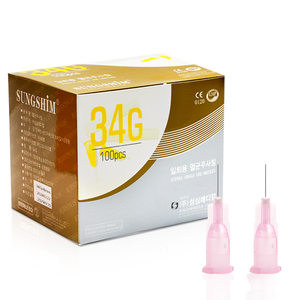
Self-administration of insulin requires ultra-fine gauge needles (up to 34G) equipped with automatic dual-end protective shields. As the patient depresses the pen against the skin, the front shield retracts automatically, locking permanently after injection to protect both patients and waste disposal personnel.
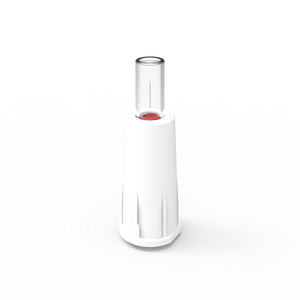
Indispensable for oncology and long-term chemotherapy administration, non-coring Huber needles feature a deflecting bevel tip that pierces the silicone septum of implanted access ports without slicing or coring material into the bloodstream.
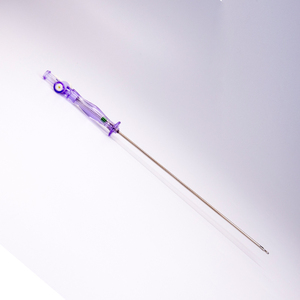
Laparoscopy procedures require spring-loaded safety Veress needles (120mm to 150mm) featuring a blunt stylet that extends immediately upon entering the peritoneal cavity. Similarly, ultra-sharp mesotherapy needles (30G–34G) deliver precise dermatological micro-injections with minimal skin edema.
As a vertically integrated factory, we maintain strict process tolerance standards from raw resin compounding to final package sealing. The data below outlines key engineering tolerances validated in our quality assurance laboratory.
| Specification Parameter | Technical Standard / Range | Testing & Quality Control Protocol |
|---|---|---|
| Cannula Stainless Steel Grade | Medical Grade AISI 304 / 316L (EN 1.4301) | Spectrometric alloy analysis & tensile strength test |
| Needle Outer Diameter (Gauges) | 10G (3.4mm) down to 34G (0.18mm) | Laser micrometric outer dimension measurement |
| Penetration / Puncture Force | < 0.35 N (Optimized for low-pain entry) | Digital universal force gauge testing (ISO 7864) |
| Lubrication Specification | Dow Corning Medical Silicone Oil (100% pure) | Micro-dose uniform ultrasonic spraying process |
| Sterilisation Standard | Ethylene Oxide (EO) gas, SAL 10-6 | ISO 11135 validation, bioburden & residual testing |
| Biocompatibility Compliance | ISO 10993 (Cytotoxicity, Hemolysis, Sensitization) | Third-party laboratory toxicity validation reports |
| Safety Mechanism Retention Force | > 15 N (Permanent Lock Guarantee) | Destructive pull-test verification post-activation |
Healthcare supply chain directors and medical device importers must anticipate evolving regulatory frameworks and technological advancements. The global market for safety needles is projected to expand significantly over the next decade, driven by stringent hospital safety protocols and growing chronic disease management.
Hospital procurement policies increasingly favor fully passive safety devices that lock automatically without requiring deliberate clinician intervention, eliminating human error in high-stress emergency environments.
Transitioning toward recyclable medical polymers, reduced plastic housing mass, and non-PVC materials to lower biohazard waste incineration footprint without compromising device structural integrity.
Global brand owners are shifting from multi-vendor sourcing to strategic CDMO partners capable of providing end-to-end injection moulding, automated assembly, sterilisation, and local regulatory filing support.
Operating controlled injection moulding areas, Class 100,000 (ISO Class 7/8) cleanrooms, and an in-house Ethylene Oxide (ETO) sterilisation plant, our manufacturing facility represents the pinnacle of precision medical disposable engineering. Over 80% of our production volume is exported across 52+ countries under long-term OEM and CDMO agreements.
All assembly, ultrasonic siliconization, pouch sealing, and secondary packaging take place within monitored cleanrooms with HEPA filtration, strict temperature/humidity control, and automated particle counter surveillance.
We provide full technical documentation to ensure smooth registration with national drug and medical device regulatory bodies globally.
Key inquiries answered for medical device distributors, purchasing managers, and healthcare tender coordinators.
Standard OEM orders typically start at 100,000 units per SKU, depending on custom needle gauge and shield color-coding specifications. Standard catalogue items under factory branding can be ordered in smaller master carton quantities.
Yes. Our facilities operate under ISO 13485 certified quality management systems, with product lines holding full CE compliance certificates and technical documentation prepared for FDA 510(k) and EU MDR registration pathways.
Every production batch undergoes captive Ethylene Oxide (ETO) sterilisation validated to ISO 11135 standards. Shipments are accompanied by a Certificate of Analysis (COA) detailing bioburden, sterility verification, and residual ETO limits below international thresholds.
Absolutely. Our internal R&D and toolmaking teams specialize in custom CDMO solutions, offering custom bevel angles, needle tube lengths, hub color coding according to ISO 6009, and specialized blister film printing.
Devices are packaged in medical-grade paper-poly blister pouches or rigid plastic trays providing a validated 5-year sterile barrier under standard storage conditions. Master cartons are reinforced for international sea and air freight.
Standard repeat orders ship within 20 to 30 days from order confirmation. Custom OEM development programs follow an agreed milestone schedule incorporating prototyping, mold trial, sample approval, and validation.