
Comprehensive Technical Whitepaper: Advanced Manufacturing Standards for Wholesale Infusion Sets & Disposable Urology Consumables
The global market for disposable medical devices demands uncompromising precision, biological safety, and flawless mechanical performance. As a top-tier China wholesale infusion set factory and exporter, our production architecture is optimized to solve critical clinical challenges: preventing healthcare-associated infections (HAIs), avoiding phlebitis, eliminating catheter displacement, and ensuring pin-point fluid flow rates under demanding ICU conditions.
1. Polymers & Material Science: Transitioning from DEHP-PVC to TPE & Silicone
Material biocompatibility is the bedrock of modern IV infusion and urological therapy. Historically, flexible Polyvinyl Chloride (PVC) plasticized with Di(2-ethylhexyl)phthalate (DEHP) was the industry standard. However, growing regulatory pressure from the European Chemicals Agency (ECHA) and EU MDR directives has accelerated the shift toward safer alternatives:
- Non-DEHP Medical-Grade PVC: Utilizes alternative bio-compatible plasticizers such as TOTM (Trioctyl Trimellitate) or DINCH, preventing toxic leaching during the administration of lipophilic drugs, oncology infusions, and blood components.
- Thermoplastic Elastomer (TPE) Tubing: 100% PVC-free and plasticizer-free. TPE eliminates drug adsorption (vital for nitroglycerin, insulin, and paclitaxel infusions) while offering superior environmental sustainability through recyclability.
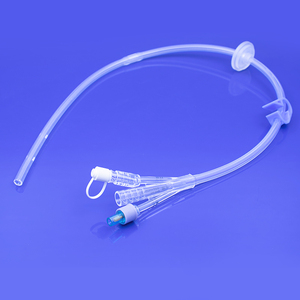
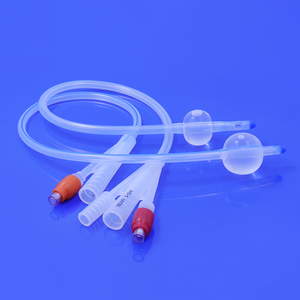
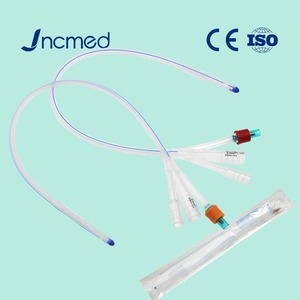
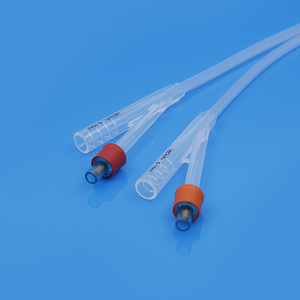
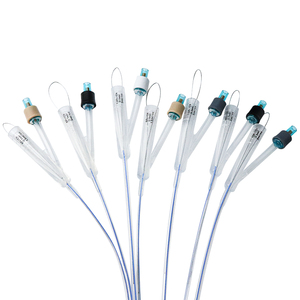
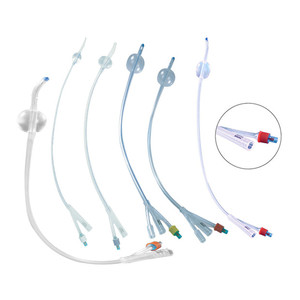
- 100% Medical-Grade Liquid Silicone Rubber (LSR): Essential for our Foley Catheter lines. Platinum-cured silicone provides extreme soft flexibility, minimal tissue friction, non-reactive biocompatibility for up to 30 days of indwelling placement, and immunity to encrustation.
| Material Type | Biocompatibility Index | Drug Adsorption Rate | Indwelling Duration | Key Clinical Application |
|---|---|---|---|---|
| Standard Medical PVC | ISO 10993 Compliant | Moderate to High | Short-term (< 24 Hrs) | General Gravity IV Infusion |
| DEHP-Free / TOTM PVC | High Biocompatibility | Low Leaching Profile | Medium-term (< 72 Hrs) | Pediatric & Oncology Lines |
| 100% TPE Polymer | Ultra-Pure / Inert | Near-Zero Adsorption | Extended IV Therapy | Sensitive Lipid & ICU Drugs |
| Liquid Silicone (LSR) | Tissue Non-Reactive | Negligible | Long-term (< 30 Days) | 2-Way / 3-Way Foley Catheters |
2. Fluid Dynamics Engineering: Hydrostatic Accuracy & Air-Filter Mechanisms
In gravity IV infusion sets, flow velocity control is vital to avoid over-infusion or bolus hazards. Our drip chambers are engineered with precision micro-moulded droppers delivering exact calibration:
- Macro-Drip Systems: Calibrated to 10, 15, or 20 drops/mL for standard adult fluid replacement protocols.
- Micro-Drip Systems: Calibrated to 60 drops/mL, enabling fine volumetric titration for pediatric and neonatal critical care.
- 15-Micron Solution Filter Disc: Integrated at the floor of the drip chamber to trap micro-particulates, insoluble precipitates, and rubber fragments from medication vials, safeguarding patients against pulmonary micro-embolisms.
- Auto-Vent & Anti-Air Valves: Hydrophobic PTFE membrane filters allow continuous air venting while stopping fluid leakage, maintaining set operation even when fluid bags run dry.
3. Urology & Catheter Securement Innovations
Catheter-Associated Urinary Tract Infections (CAUTI) and urethral trauma represent major costs for hospital networks. Our Silicone Foley Catheters and specialized Fixation Devices integrate critical technical safety features:
- Symmetrical Balloon Inflation: Micro-walled silicone balloons inflate evenly around the catheter lumen, preventing tip deflection and vesical mucosa erosion.
- Smooth Beveled Drainage Eyes: Distal eyes are precision thermo-polished to eliminate sharp edges, guaranteeing painless insertion and rapid urine evacuation.
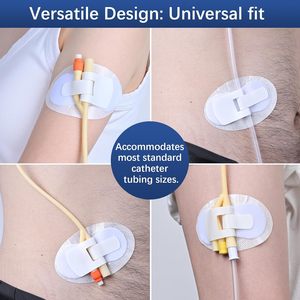
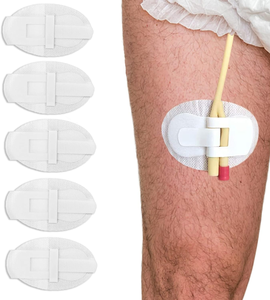
- Self-Adhesive Stabilization Stickers: Breathable, hypoallergenic skin patches lock the Foley catheter securely against the thigh. By neutralizing mechanical tension caused by patient movement, these devices reduce CAUTI rates by over 45%.