Direct factory wholesale pricing, Class 10,000 cleanroom manufacturing, and full regulatory dossier support.
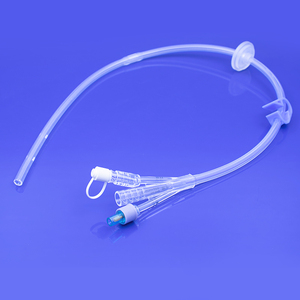
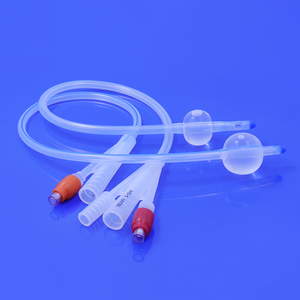
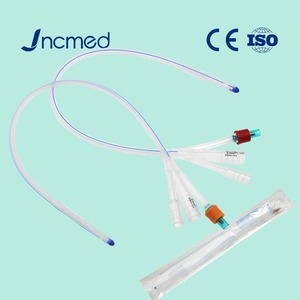
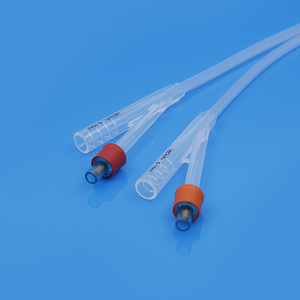
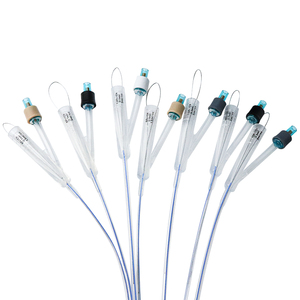
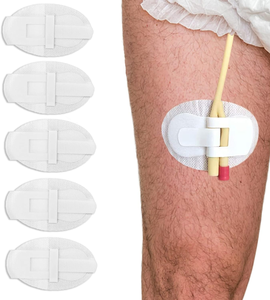
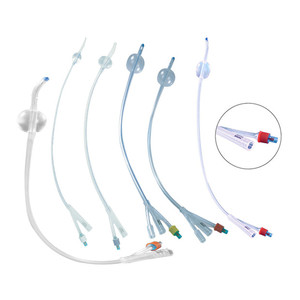
From controlled injection moulding to automated packaging, our facility guarantees zero risk in hospital tender procurement and contract manufacturing.
Operates under audited Quality Management Systems meeting EU MDR requirements, supported by complete Technical Files, Bioburden validation, and Free Sale Certificates for swift global registration.
Equipped with fully automated, in-house Ethylene Oxide (ETO) sterilisation chambers. Every single production batch is verified for chemical indicators, biological sterility, and residual levels under ISO 11135.
Full support for OEM customisation, private-label pouches, customized catheter lengths, specialized connector tipping, multi-lingual IFUs, and UDI barcoding tailored for regional market access.
A comprehensive analysis of material science, cuff biomechanics, risk mitigation in critical care ventilation, and strategic supply chain execution from leading Chinese OEM factories.
In modern intensive care units (ICU), operating theatres, and emergency airway management, the Endotracheal Tube (ETT) remains the primary gold-standard device for securing a definitive airway. For institutional purchasing officers, medical device distributors, and hospital procurement boards, selecting a certified China Wholesale Endotracheal Tube Factory & Supplier requires evaluating far more than landed cost per unit. It demands a rigorous technical audit of raw material biocompatibility, polymer thermosensitivity, cuff pressure dynamics, and cleanroom assembly tolerances.
This technical white paper synthesizes thirty years of medical device manufacturing experience to guide global procurement managers through the technical specifications, regulatory frameworks, and market evolutions governing single-use endotracheal tubes and associated critical care catheter systems.
The performance of an endotracheal tube within the human trachea is dictated by polymer selection. Leading Chinese manufacturing plants utilize two primary polymer bases: Thermosensitive Medical-Grade Polyvinyl Chloride (PVC) and 100% Liquid Silicone Rubber (LSR).
Standard disposable endotracheal tubes are extruded using plasticized, non-DEHP (or DEHP-free) medical PVC. The defining engineering feature of premium ETT tubing is thermosensitivity. At ambient room temperature (20°C–23°C), the tube maintains sufficient rigidity to facilitate smooth insertion via direct laryngoscopy or video laryngoscopy without structural buckling. Upon exposure to human body temperature (37°C) within the airway, the polymer softens dynamically, conforming gently to the patient's tracheobronchial anatomy. This reduces localized tissue contact pressure against the tracheal rings and vocal cords, drastically lowering the risk of post-extubation tracheal stenosis, mucosal ulceration, and sore throat.
For surgical procedures involving extreme head and neck positioning (e.g., neurosurgery, maxillofacial surgery, prone-position ventilation), standard PVC tubing risks external occlusion due to kinking or patient biting. Reinforced (Anesthetic/Armored) Endotracheal Tubes incorporate a continuous stainless steel or nylon spiral coil embedded entirely within the tube wall matrix. Advanced extrusion tooling ensures the metal coil is fully encapsulated without micro-voids, providing 360-degree kink resistance while preserving inner lumen smoothness to facilitate unhindered suction catheter passage.
| Technical Parameter | Standard Cuffed ETT (PVC) | Reinforced Cuffed ETT | 100% Silicone ETT |
|---|---|---|---|
| Primary Material | Thermosensitive Medical PVC | PVC with Encapsulated SS Coil | Medical Grade Liquid Silicone |
| Kink Resistance | Standard (Positional dependent) | Ultra-High (360° Flex Resistance) | High Structural Memory |
| Cuff Material Options | HVLP PVC / Micro-Thin PU | HVLP PVC / Polyurethane | Silicone Elastomer Balloon |
| Primary Clinical Use | Routine Surgery / General ICU | Head/Neck Surgery, Prone ICU | Long-Term Intubation / Latex Sensitive |
| X-Ray Visibility | Full Length Radiopaque Line | Full Length Radiopaque Line | Radiopaque Stripe Embedded |
The inflatable cuff positioned at the distal end of an endotracheal tube serves two critical clinical functions: sealing the airway to permit effective positive-pressure mechanical ventilation, and preventing micro-aspiration of pharyngeal secretions into the lower respiratory tract.
Historically, low-volume high-pressure (LVHP) cuffs exerted excessive focal pressure on the tracheal wall (>30 cmH2O), frequently exceeding mucosal capillary perfusion pressure and leading to ischemia. Modern OEM factories in China have transitioned overwhelmingly to High-Volume Low-Pressure (HVLP) cuff designs.
An HVLP cuff possesses a larger resting diameter relative to the trachea. When inflated to a recommended sealing pressure of 20–30 cmH2O, the thin cuff membrane spreads the contact surface over a wider anatomical area, minimizing mucosal ischemia. Furthermore, cutting-edge factories now utilize Micro-Thin Polyurethane (PU) Cuffs (10 to 15 microns wall thickness, compared to 50 microns for traditional PVC). Polyurethane cuffs fold without forming micro-channels upon inflation, creating an airtight fluid seal that blocks subglottic secretions from seeping into the lungs—thereby directly reducing the incidence of Ventilator-Associated Pneumonia (VAP) in long-term ICU patients.
The distal tip of a professionally engineered ETT must feature an atraumatic, polished bevel (typically 38° angle) to prevent vocal cord trauma during passage. Opposite the bevel, a smoothly contoured Murphy Eye is mandatory. The Murphy Eye provides an alternative collateral gas flow pathway in the event that the primary distal orifice becomes occluded by mucous plugs or alignment against the tracheal wall, guaranteeing patient safety during mechanical ventilation.
The global medical supply chain for airway management products is undergoing rapid structural evolution. B2B buyers must align their sourcing strategies with four dominant macro trends driving Chinese manufacturing hubs:
To eliminate human error and micro-leakages, top-tier factories have upgraded from manual solvent bonding to Automated Ultrasonic Welding and robotic tipping. Optical vision-inspection systems inspect 100% of manufactured tubes for bevel burrs, Murphy Eye symmetry, and radiopaque line continuity at line speed. This shift guarantees lot-to-lot consistency for high-volume tender orders.
With the implementation of the European Union Medical Device Regulation (EU MDR 2017/745), regulatory documentation requirements have escalated. Overseas distributors can no longer rely on superficial CE certificates. Qualified Chinese manufacturers now provide comprehensive STED (Summary Technical Documentation), including ISO 10993 biocompatibility testing (cytotoxicity, sensitization, intracutaneous reactivity, systemic toxicity), ETO residue depletion curves (ISO 10993-7), and shelf-life accelerated stability studies.
Unique Device Identification (UDI) compliance is now enforced across North America, Europe, and Asia-Pacific healthcare systems. Leading wholesale suppliers deliver direct barcode marking on primary Tyvek pouches and outer cartons, linking GS1 GTINs with lot numbers and manufacture dates for seamless hospital inventory management and recall traceability.
When conducting factory audits or evaluating pre-shipment sample lots from a China supplier, procurement managers should mandate the following physical and mechanical verification benchmarks:
Direct technical and logistical answers for hospital purchasing agents, medical device importers, and brand managers.
Full export documentation includes ISO 13485 Quality Management System certificates, CE Conformity Certificates under applicable European regulations, Free Sale Certificates (FSC), ETO Sterilization Batch Reports, ISO 10993 Biocompatibility Test Dossiers, and complete Technical Files to support local Ministry of Health product registration.
Standard catalogue items typically carry a baseline MOQ starting at 5,000 to 10,000 units per SKU size. For custom OEM branding—including customized Tyvek pouch printing, customized multi-lingual artwork, specific tube length extrusions, or custom catheter kits—MOQs are determined per full cleanroom production lot (typically 10,000 to 20,000 units).
Sterilization is executed in captive Ethylene Oxide (ETO) chambers following ISO 11135 validated gas concentration, humidity, temperature, and exposure cycles. Every batch undergoes a mandatory 7-to-14 day aeration period. Gas chromatography testing confirms residual ethylene oxide and ethylene chlorohydrin levels remain strictly below the limits mandated by ISO 10993-7.
Yes. Our tooling portfolio encompasses pediatric uncuffed endotracheal tubes (sizes 2.0mm to 4.5mm ID), standard adult cuffed endotracheal tubes (sizes 5.0mm to 10.0mm ID), armored/reinforced tubes, micro-thin PU cuffed series, as well as pediatric 2-Way/3-Way silicone Foley catheters (6Fr to 10Fr) and adult variants (12Fr to 24Fr).
Standard manufacturing lead times for full 20ft or 40ft High Cube container loads range from 25 to 35 days following artwork approval and deposit confirmation. Expedited production scheduling is available for repeat contractual hospital tender orders with rolling forecasts.
Primary packaging utilizes medical-grade medical paper/Tyvek pouches with peelable heat seals. Outer master cartons are fabricated from heavy-duty 5-ply double-wall corrugated fiberboard, reinforced with corner protectors, moisture-barrier poly-wraps, and palletized according to ISTA / ASTM D4169 transport simulation standards.
Request technical specifications, factory audit reports, product samples, or instant wholesale pricing for your upcoming supply tenders.
Get a Quote