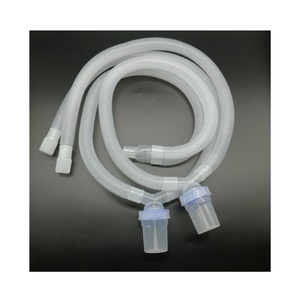
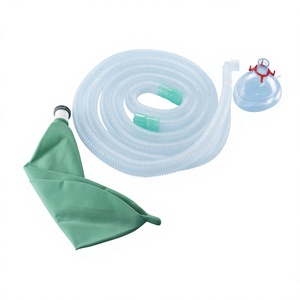
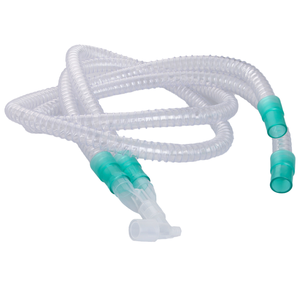
In modern critical care and anesthesia management, the mechanical integrity, biocompatibility, and fluid dynamics of medical breathing circuits directly impact patient clinical outcomes and hospital operational safety. A breathing circuit serves as the critical gas delivery conduit between a mechanical ventilator or anesthesia machine and a patient. Ensuring precise tidal volume delivery, zero leakage under high inflation pressures, and minimal condensation ("rainout") requires rigorous polymer selection, specialized extrusion geometry, and controlled cleanroom manufacturing.
As leading global healthcare systems transition toward stringent regulatory frameworks—such as the European Union Medical Device Regulation (EU MDR 2017/745) and US FDA 510(k) clearances—China’s top breathing circuit manufacturers have evolved from low-cost suppliers into high-precision Contract Development and Manufacturing Organizations (CDMO) and Original Equipment Manufacturers (OEM). By integrating automated injection molding, precision tubing extrusion, and in-house Ethylene Oxide (ETO) sterilization, tier-one Chinese suppliers deliver medical-grade solutions that strictly conform to ISO 5367 (Anaesthetic and respiratory equipment — Breathing sets and connectors).
Clinical Information Gain: Condensation management in heated wire breathing circuits reduces ventilator-associated pneumonia (VAP) risks in ICU settings by maintaining precise relative humidity without fluid buildup in the expiratory limb.
The manufacturing of disposable medical breathing circuits relies on three primary medical-grade polymers, each offering unique physical properties for specific clinical applications:
Selecting the correct breathing circuit configuration depends on patient demographic (adult, pediatric, neonatal), clinical setting (operating room, ICU, transport, veterinary care), and moisture management requirements. The table below delineates the key technical parameters across primary circuit designs:
| Circuit Typology | Primary Material | Flow Resistance (at 60 L/min) | Compliance (mL/kPa) | Key Clinical Advantage | Target Application |
|---|---|---|---|---|---|
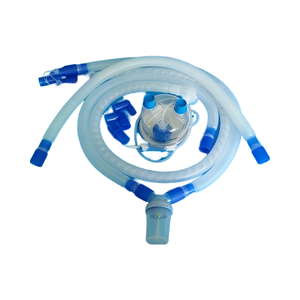
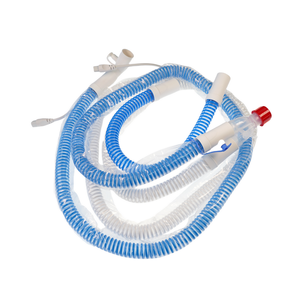
| Heated Wire Circuit | Medical EVA / Dual Spiral Wire | < 0.15 kPa | < 1.2 | Prevents condensation (rainout); maintains optimal gas humidity | ICU Long-term Ventilation |
| Smoothbore Circuit | EVA Outer Ribbed / Smooth Inner | < 0.10 kPa | < 1.0 | Lowest flow turbulence; minimizes dead space accumulation | High-Frequency & Pediatric Ventilation |
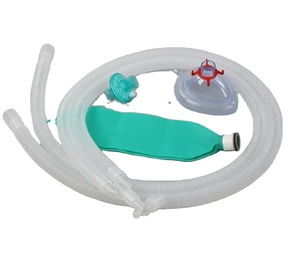
| Expandable Circuit | Kink-Resistant Medical PVC | < 0.22 kPa | Flexible (1.5 - 2.5) | Compact storage; adjustable length reduces dead space volume | Operating Room (OR) Anesthesia |
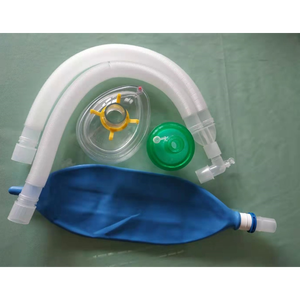
| Corrugated Standard | Standard Medical PVC / EVA | < 0.18 kPa | < 1.8 | High cost-efficiency; lightweight and universal ISO 22mm fit | General Anesthesia & Emergency Transport |
| Veterinary Special Purpose | Reinforced PVC / EVA | Variable | Customized | Integrated water traps; durable for animal anesthesia systems | Veterinary Clinics & Research Labs |
The global medical device supply chain is undergoing structural shifts driven by stringent environmental standards, automated quality control, and intelligent patient monitoring integration. Hospital procurement directors and OEM brand managers must align with manufacturers adopting the following industry trends:
Global healthcare directives, particularly REACH and EU MDR compliance, are driving the phasing out of DEHP and other orthophthalate plasticizers in respiratory tubing. Top Chinese manufacturers are leading the adoption of TOTM (Trioctyl Trimellitate) plasticized PVC and 100% recyclable EVA materials, ensuring zero toxic leaching during high-humidity ventilation.
Condensation within breathing circuits poses significant contamination risks and can cause ventilator auto-triggering. Future procurement trends favor dual-heated wire circuits embedded with micro-spiral heating elements. These systems interface seamlessly with active humidifiers to maintain a consistent 37°C gas temperature and 100% relative humidity without generating excess fluid buildup.
To meet US FDA and European EUDAMED traceability mandates, advanced production lines now incorporate laser-etched or ink-printed GS1 DataMatrix UDI codes directly on individual sterile pouches and master cartons. This enables automated inventory tracking, batch release verification, and streamlined recall management for global hospital networks.
Our manufacturing facility operates as a fully integrated CDMO/OEM partner, offering end-to-end medical device fabrication under strict international quality control protocols. From resin selection to final container loading, every step is executed to de-risk procurement for international buyers:
Tubing extrusion, injection molding of 22mm/15mm ISO conical connectors, and manual assembly are performed within monitored ISO Class 7 (Class 10,000) cleanrooms to maintain minimal bioburden levels prior to sterilization.
Equipped with automated Ethylene Oxide (ETO) sterilization chambers. Every batch undergoes validated 14-day aeration and residual testing in accordance with ISO 11135 and ISO 10993-7 standard limits.
In-house physical, chemical, and microbiological laboratories test for leak rates (pneumatic decay), joint tensile strength, flow resistance, compliance, and ETO residuals prior to issuing Certificates of Analysis (CoA).
Partner with China's leading medical breathing circuit manufacturer. Contact our international engineering desk to receive comprehensive technical data sheets, sample kits, and turnkey CDMO quotations.