Hospital-Grade Medical Disposables Manufactured in Class 10,000 Cleanrooms with ETO Sterilization
In modern intensive care units (ICU), emergency ENT surgeries, and long-term mechanical ventilation management, tracheostomy tubes represent a critical lifesaving class IIa/IIb medical device interface. Procurement directors, hospital purchasing boards, and medical device brand owners seeking supply partners in China face a rapidly evolving landscape driven by stricter international quality standards (EU MDR 2017/745, US FDA 510k), advanced polymer chemistry requirements, and automated cleanroom manufacturing requirements.
China's medical disposables export infrastructure has undergone a systemic paradigm shift. Leading manufacturers have migrated from low-cost manual assembly to fully integrated production ecosystems. Incorporating precision injection moulding, automated extrusion of thermosensitive medical-grade PVC and silicone, laser-guided beveling, radio-frequency (RF) cuff welding, and internal Ethylene Oxide (ETO) sterilization facilities under one roof, premier Chinese suppliers provide unmatched supply stability and risk mitigation.
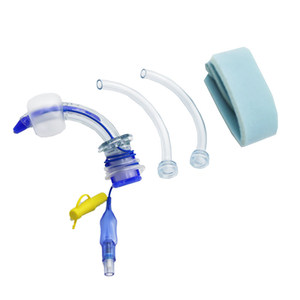
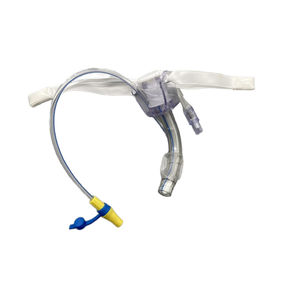
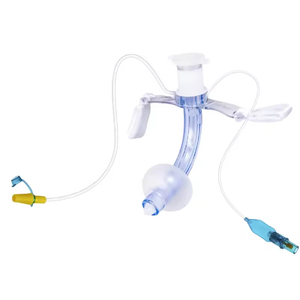
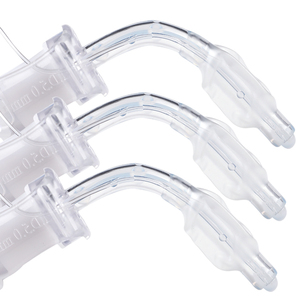
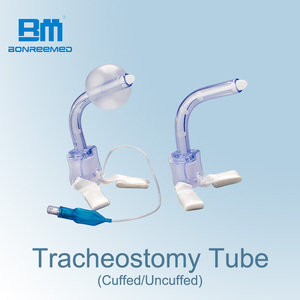
In-depth technical breakdown of device configurations designed to address anatomical variations, ventilator-associated pneumonia (VAP) mitigation, and patient comfort.
Engineered to distribute sealing pressure evenly against the tracheal mucosa (maintaining intracuff pressure between 20-30 cmH2O). Minimizes the risk of tracheal ischemia, necrosis, and stenosis while preventing micro-aspiration during positive-pressure ventilation.
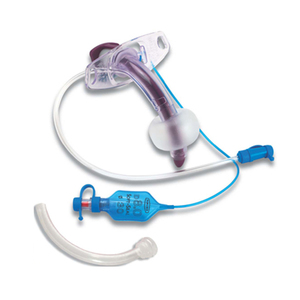
Features a dedicated evacuation channel ending above the cuff. Allows continuous or intermittent aspiration of pooled secretions in the subglottic space, directly reducing the incidence of Ventilator-Associated Pneumonia (VAP) by up to 50% in ICU settings.
Includes a disposable or reusable inner cannula that can be unlocked and removed for instant clearing of mucus plugs without decannulating the patient. Enhances airway hygiene and drastically reduces emergency re-intubations.
Incorporates a continuous stainless steel wire coil embedded within flexible PVC walls. Prevents lumen collapse or kinking during radical neck dissections, complex anatomical positions, or patient movement.
| Tube Variant | Primary Clinical Indication | Material Composition | Cuff Characteristics | Key Safety Feature |
|---|---|---|---|---|
| Cuffed with Inner Cannula | ICU Mechanical Ventilation | Thermosensitive Medical PVC | HVLP (High-Volume Low-Pressure) | Quick inner cannula exchange reduces occlusion risk |
| Subglottic Suction Cuffed | Long-term Intubation / VAP Prevention | Medical Grade DEHP-Free PVC | Thin Polyurethane / HVLP | Evacuation of secretional pool above cuff barrier |
| Uncuffed Dual-Cannula | Spontaneously Breathing / Weaning | Thermosensitive Soft PVC | None (Uncuffed) | Minimizes airway resistance, ideal for pediatric/weaning |
| Reinforced Wire-Armored | Head & Neck Surgery / Tracheal Compression | Spiral Stainless Wire + PVC | HVLP / Low Profile | Absolute kink resistance under high mechanical stress |
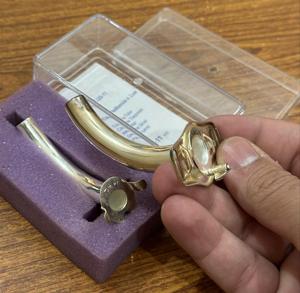
| Metal Jackson Tube | Permanent Stoma Maintenance / ENT Care | 316L Surgical Stainless Steel | None | Extreme durability, non-degrading, easily sterilizable |
How Integrated Contract Manufacturing (CDMO/OEM) Eliminates Quality Risks for International Importers
In-house automated Ethylene Oxide (ETO) chambers validate cycles per ISO 11135 standards. Gas chromatography testing ensures residual ethylene oxide levels remain strictly under standard limits (<4mg/device), guaranteeing biosecurity.
Controlled injection moulding areas paired with an in-house CNC toolroom allow custom neck flange shaping, custom angle bending, and precise printing of depth markers and sizing calibrations directly onto the outer lumen.
Every batch undergoes 100% inflation testing for cuff symmetry, burst pressure resistance, tensile strength connection tests (flange to shaft), leak detection, and airflow resistance measurements per ISO 5366 standards.
Anticipating technological shifts and regulatory demands in airway device sourcing over the next decade.
Traditional PVC cuffs have a wall thickness of 50-70 microns, which can form micro-channels when inflated, allowing secretions to bypass the cuff into the lungs. Advanced Chinese factories are transitioning to ultra-thin Polyurethane (PU) cuffs (7-10 microns). PU cuffs fold without channel formation, sealing the trachea effectively at reduced pressures and setting a new standard for VAP reduction.
Bacterial colonization on the inner walls of synthetic tubes is a major cause of hospital-acquired infections. Next-generation CDMO manufacturing integrates antimicrobial silver nanoparticle coatings or hydrophilic coatings that prevent protein adsorption and biofilm formation, prolonging indwelling times safely.
Integrating micro-pressure sensors and pH monitoring lines directly into the pilot balloon mechanism is transitioning from prototype to production. This enables continuous electronic monitoring of cuff pressure, sending automated alerts to ICU workstations if pressure drops below 20 cmH2O or exceeds 30 cmH2O.
Global health regulations (REACH, EU MDR) are mandating the complete elimination of DEHP and phthalate plasticizers. Chinese medical polymer suppliers are pioneering TOTM (Tri-Octyl Trimellitate) and bio-based plasticizer formulations that maintain tube softness while preventing toxic leaching.
Essential answers regarding compliance, minimum order quantities, customization, and quality control.
Direct factory pricing, complete regulatory technical files, rapid CDMO prototyping, and world-class ETO sterile production lines. Talk to our technical team today.