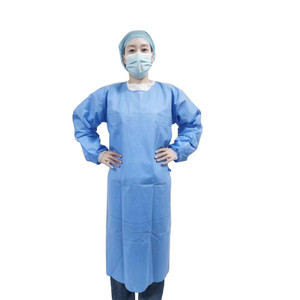
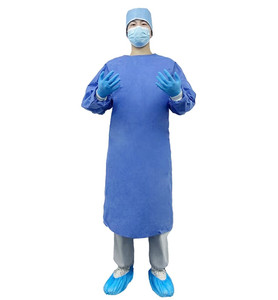
Hospital-grade protective wear compliant with EU MDR 2017/745, EN 13795, and AAMI PB70 liquid barrier protocols.

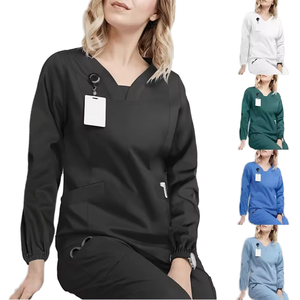
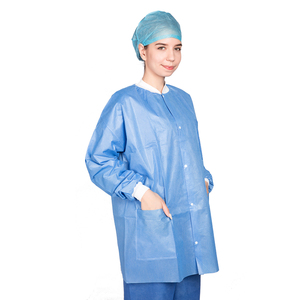
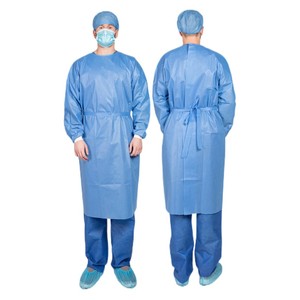
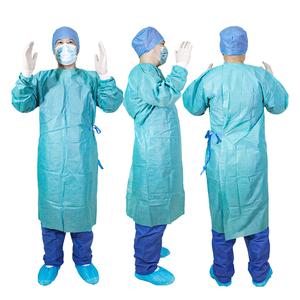

An authoritative guide for medical purchasing managers, hospital procurement committees, and international medical device distributors.
Surgical gowns serve as the primary barrier preventing nosocomial pathogen transmission in surgical environments. Compliance requires strict adherence to ANSI/AAMI PB70 standards, categorizing liquid barrier performance from Level 1 (minimal risk) to Level 4 (highest fluid and viral resistance under pressure).
Modern operating theater gowns utilize multi-layer non-woven polypropylene composite engineering. Layers of spunbond (S) provide structural tensile strength and abrasion resistance, while triple meltblown (MMM) micro-fibrous filtration cores block bacteria, particulates, and fluid strike-through without sacrificing breathability.
Aseptic integrity relies on validated 100% Ethylene Oxide (ETO) terminal sterilization processes governed by ISO 11135 standards. Each production batch undergoes rigorous biological indicator incubation, bioburden assessment, and residual ETO/ECH clearance testing prior to international shipment dispatch.
| AAMI Level | Fluid Barrier Requirement | Test Methodology Standard | Primary Clinical Application | Recommended Fabric Construction |
|---|---|---|---|---|
| Level 1 | Minimal fluid resistance (Water impact < 4.5g) | AATCC 42 (Water Impact Penetration) | Basic Patient Isolation, Visitor Gowns, Standard Care | Spunbond Polypropylene (PP) 25-30 gsm |
| Level 2 | Low fluid barrier (Impact < 1.0g, Hydrostatic > 20cm H2O) | AATCC 42 / AATCC 127 (Hydrostatic Pressure) | Minimally Invasive Surgery, Ophthalmology, Phlebotomy | SMS Non-woven 35-40 gsm |
| Level 3 | Moderate fluid barrier (Impact < 1.0g, Hydrostatic > 50cm H2O) | AATCC 42 / AATCC 127 | General Surgery, Arthroscopy, Laparoscopic Procedures | High Performance SMS / SMMS 40-50 gsm |
| Level 4 | Highest fluid & viral barrier (Zero penetration under pressure) | ASTM F1670 (Synthetic Blood) / ASTM F1671 (Viral Pen.) | Cardiovascular Surgery, Trauma, High-Fluid Procedures | Reinforced SMMMS + PE Film Laminate 55-65 gsm |
Operating from state-of-the-art manufacturing hubs in India, Angiplast Pvt. Ltd. represents the apex of single-use medical device engineering and international export logistics.
Key market shifts driving surgical textile evolution, sustainability mandates, and intelligent risk mitigation for healthcare buyers.
Global healthcare systems are implementing aggressive decarbonization goals. Procurement departments are demanding sustainable medical non-wovens produced from recyclable polypropylene structures and bio-based Polylactic Acid (PLA) blends. Next-generation disposables maintain strict AAMI Level 3/4 barrier integrity while reducing landfill carbon footprint by up to 35% through circular waste-management workflows.
Surgical staff discomfort during long procedures contributes to surgeon fatigue. Modern gown architectures utilize monolithic micro-porous polyolefin films laminated to soft non-woven inner linings. These membranes allow water vapor (perspiration) molecules to escape while permanently blocking larger liquid droplets and blood-borne pathogens.
To prevent hospital stock-outs and streamline Central Sterile Services Department (CSSD) workflows, leading manufacturers are integrating passive UHF RFID tags into bulk packaging and sterile pouches. This enables automated real-time tracking, batch expiration monitoring, and automated reorder triggers within hospital ERP systems.
Geopolitical volatility and shipping bottlenecks have led healthcare networks away from single-region sourcing. Global buyers are establishing dual-sourcing models with verified Indian medical device manufacturers like Angiplast, relying on robust OEM contract manufacturing capabilities to guarantee uninterrupted operational readiness.
Expert answers addressing regulatory, material, ordering, and compliance inquiries for international B2B purchasers.
SMS stands for Spunbond-Meltblown-Spunbond. The outer spunbond layers deliver mechanical strength and tear resistance, while the interior meltblown layer acts as the bacterial filter core. SMMS adds a second meltblown layer, and SMMMS features three meltblown layers. Additional meltblown layers significantly increase hydrostatic head pressure ratings and particle filtration efficiency (PFE) without compromising the lightweight comfort of the garment.
Surgical gowns exported to the EU must comply with Medical Device Regulation (EU) 2017/745 (MDR) under Class I sterile device classifications. Key technical standards include EN 13795-1 (performance requirements for surgical drapes and gowns) and EN ISO 10993 for biological evaluation of medical devices, covering cytotoxicity, skin sensitization, and irritation testing.
According to ANSI/AAMI PB70 and EN 13795 standards, critical zones include the front chest area and sleeves from the cuff to above the elbow. Standard gowns provide uniform liquid barrier protection across the entire garment. Reinforced gowns incorporate an additional impervious film or fabric layer across these critical zones to withstand high fluid loads and mechanical pressure experienced during high-bleed surgical operations.
OEM private-label minimum order quantities depend on fabric specification, weight (gsm), color dye requirements, and custom packaging designs. Typically, production lots start at 10,000 units per SKU. Our engineering team accommodates custom sleeve styling, sonic seam welding specifications, barcode labels, and localized user manual printing within unified contract agreements.
Every shipment is dispatched with complete quality assurance dossiers, including a Certificate of Analysis (CoA), Certificate of Sterilization (listing ETO chamber cycle charts and biological indicator test pass results), Bill of Lading, Packing List, Commercial Invoice, and Free Sale Certificate (FSC) to facilitate seamless customs clearance and local medical device registration.
Linting can carry microorganisms into surgical wounds, causing postoperative complications. High-quality surgical gowns undergo particle release testing per EN ISO 9073-10 (Gelbo Flex method). Utilizing continuous filament spunbond polypropylene and sealed ultrasonic seams minimizes lint release compared to traditional woven cotton textiles.
Contact our international export team today for technical product specifications, OEM private-label consultations, factory audit requests, and competitive volume pricing.
