Explore our clinical-grade disposable products engineered in Class 10,000 cleanroom environments. From advanced nasal cannula systems to precision urinary catheter stabilization devices, our solutions ensure absolute physiological compatibility and patient comfort.
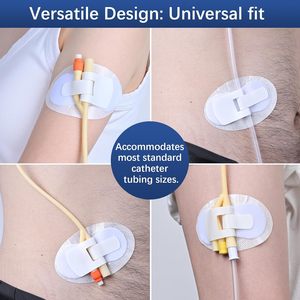
Breathable, hypoallergenic adhesive securement sticker designed to eliminate urethral traction, minimize trauma, and prevent catheter displacement during extended patient monitoring.
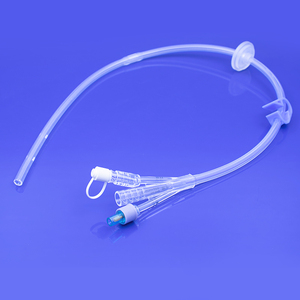
Manufactured from 100% biocompatible medical silicone. Features a dedicated irrigation lumen, smooth symmetrical balloon expansion, and soft distal eyes to mitigate tissue irritation.
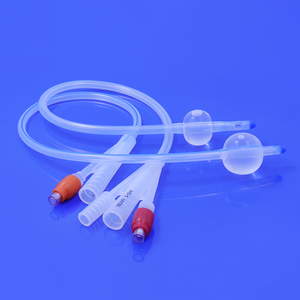
Available in diverse French sizes (6Fr to 24Fr) with color-coded valves. High chemical stability prevents encrustation during long-term bladder drainage procedures.
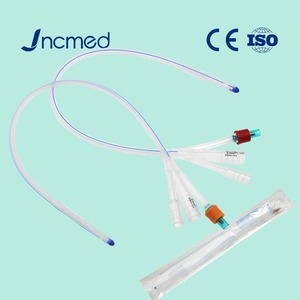
Pre-assembled sterile procedure kit designed for seamless clinical insertion. Includes drainage lumen, balloon inflation port, and continuous bladder irrigation channel.
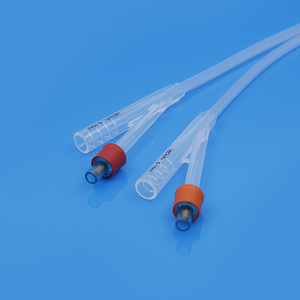
Hydrophobic silicone construction minimizes lumen constriction while maximizing drainage velocity. Fully certified under EU CE MDR standards for global hospital tenders.
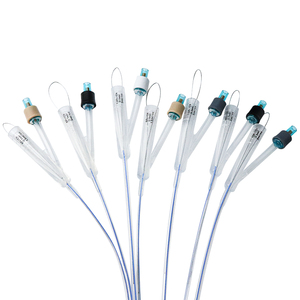
Precision-molded smooth eyelets ensure painless insertion and removal. Ideal for intensive care, perioperative management, and chronic urinary retention protocols.
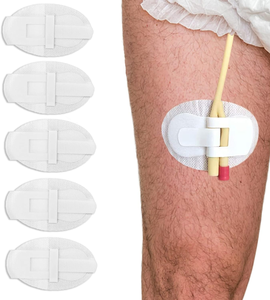
Engineered with a mechanical locking swivel clamp and skin-friendly non-woven adhesive backing. Significantly reduces CAUTI risk by limiting catheter movement.
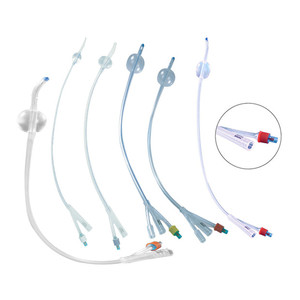
Ultra-soft, small-gauge (6Fr-10Fr) pediatric urinary catheters with radiopaque stripe for accurate fluoroscopic localization and delicate pediatric uro-care.
In modern critical care, emergency medicine, and chronic respiratory management, the Nasal Oxygen Cannula represents one of the most vital frontline non-invasive oxygen delivery interfaces. As hospital networks and medical device distributors navigate stricter international regulatory environments—specifically the European Union’s Medical Device Regulation (EU MDR 2017/745)—sourcing CE-certified nasal oxygen cannulas from verified global suppliers has transitioned from a routine procurement task to a strategic risk-mitigation imperative.
An optimal nasal cannula system must balance precise fractional inspired oxygen ($FiO_2$) delivery with exceptional patient anatomical comfort and structural integrity. Standard low-flow nasal cannulas deliver supplemental oxygen at flow rates ranging from 1 to 6 Liters per Minute (LPM), yielding an effective $FiO_2$ of approximately 24% to 44%. Achieving consistent volumetric delivery requires sophisticated polymer extrusion technology, soft-touch nasal prong geometries, and crush-resistant multi-channel tubing.
A critical failure mode in hospital oxygen delivery is acute tube occlusion caused by patient movement or bed rail compression. Advanced CE-certified manufacturers utilize Star-Lumen (Fluted Inner Core) Tubing. Unlike smooth-bore tubing, a star-lumen profile maintains continuous oxygen passage through internal longitudinal channels even when the outer wall experiences severe 180-degree kinking or external clamping forces, ensuring uninterrupted respiratory support.
Healthcare procurement officers must analyze the material composition of respiratory disposables to prevent patient adverse reactions, such as contact dermatitis and mucosal ulceration. Premium nasal cannula suppliers utilize DEHP-Free Medical Grade PVC or Liquid Silicone Rubber (LSR). DEHP (Di(2-ethylhexyl)phthalate), historically used as a plasticizer, poses potential endocrine-disrupting risks during prolonged gas contact. Transitioning to non-phthalate plasticizers (such as TOTM or DINCH) ensures full compliance with REACH and EU MDR environmental bio-safety mandates.
| Specification Parameter | Standard Commercial Grade | Clinical Grade (CE MDR Compliant) | High-Flow Therapy (HFNC) Grade |
|---|---|---|---|
| Material Formulation | Standard Phthalate PVC | DEHP-Free / TOTM Plasticized PVC | Medical Liquid Silicone / Thermo-Elastomer |
| Tubing Architecture | Smooth-Bore Cylinder | 5-Channel Star-Lumen (Crush Resistant) | Insulated Dual-Lumen Anti-Condensation |
| Prong Design | Rigid Straight Cut Prongs | Curved, Soft-Touch Anatomical Prongs | Flexible Wide-Bore Conical Prongs |
| Flow Rate Capacity | 1 – 4 LPM | 1 – 6 LPM | 10 – 70 LPM (Humidified) |
| Biocompatibility Standard | Basic Cytotoxicity Check | ISO 10993 & ISO 18562 (VOC/PM Emission) | ISO 18562 Gas Pathway Biocompatibility |
| Sterilization Method | Bulk Non-Sterile / Basic ETO | Validated Ethylene Oxide (ISO 11135) | Cleanroom Gamma / ETO Sterile Pack |
The landscape of global medical disposable procurement is undergoing a structural evolution driven by regulatory harmonization, clinical automation, and supply chain diversification. B2B buyers, hospital procurement boards, and contract pharmaceutical partners are adopting strategic sourcing criteria focused on four core future trends:
HFNC therapy is rapidly replacing invasive mechanical ventilation in sub-acute and ICU care. Suppliers offering specialized wide-bore cannulas integrated with heated breathing circuits and condensation management are positioned to capture growing clinical market share.
The sunsetting of legacy MDD certificates forces importers to audit supplier technical files. CE MDR (2017/745) compliance requires rigorous Post-Market Clinical Follow-up (PMCF) data, UDI (Unique Device Identification) barcoding, and complete supply chain transparency.
Environmental, Social, and Governance (ESG) mandates are driving hospitals to evaluate the lifecycle impact of single-use devices. Research into recyclable bio-based PVC compounds and zero-residual ETO sterilization processes is shaping next-generation device manufacturing.
Established in 1994 in Ahmedabad, India, Angiplast Private Limited has evolved into a premier vertically integrated contract manufacturer and global exporter of single-use medical disposables. Spanning infusion therapy, transfusion, urology, dialysis, and respiratory care, Angiplast delivers uncompromised engineering quality under its proprietary Angel Touch brand and customized CDMO/OEM partnerships.
All device assembly, pouch sealing, and primary packaging are executed within stringently monitored Class 10,000 (ISO Class 7) controlled cleanrooms, keeping particulate counts and initial bioburden exceptionally low prior to terminal sterilization.
With captive injection molding machines, automated extrusion lines, and an internal tool-room, Angiplast rapidly prototypes and scales custom OEM components, needle-free valves, and complex fluidic connectors without third-party bottlenecks.
Operating an in-house Ethylene Oxide (ETO) sterilizer validated under ISO 11135. Every production batch undergoes stringent physical, chemical, and biological clearance testing before batch release certificates (CoA) are issued.
With over 80% of total production dedicated to international markets across Europe, Latin America, the Middle East, Africa, and South-East Asia, Angiplast delivers complete regulatory dossier packs (FSC, COPP, ISO 13485 QMS).
From customized artwork layout, multi-lingual Instructions for Use (IFU), and individual pouch pouch sealing to master shipping carton containerization—Angiplast provides turn-key solutions for global healthcare brands.
Quality systems audited against ISO 13485 standards. Selected medical device lines carry US FDA 510(k) clearances and CE markings, supporting seamless product registration for international tenders.
Detailed technical and commercial answers to frequent questions asked by medical importers, hospital purchasing committees, and contract manufacturing buyers.
