
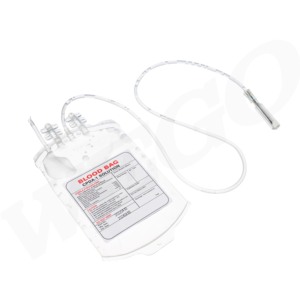
WEGO Medical Sterile Blood Collection Set Disposable Blood Transfusion Bag 250ml 350ml 450ml
Sterile, non-pyrogenic PVC collection systems with CPDA-1 anticoagulant, ultra-thin 16G wall needle, and integrated needle protector.
Explore our ISO 13485 compliant and CE-marked single, double, triple, and quadruple blood bag configurations engineered for optimal hematological stability and donor safety.
Sterile, non-pyrogenic PVC collection systems with CPDA-1 anticoagulant, ultra-thin 16G wall needle, and integrated needle protector.
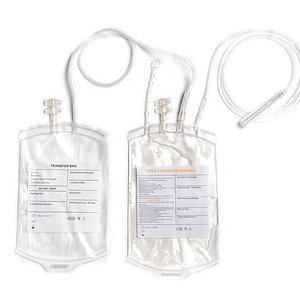
Multi-pack configurations for whole blood separation into Packed Red Blood Cells (PRBC), Fresh Frozen Plasma (FFP), and Platelet Concentrates.
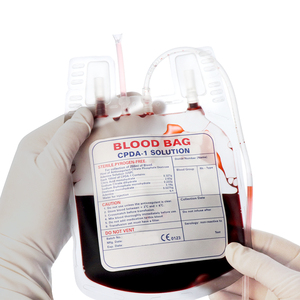
Factory-direct OEM medical plastic bags manufactured under Class 10,000 cleanroom conditions with complete ETO validation dossiers.
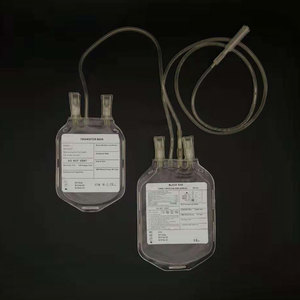
Specialized veterinary blood collection bags designed for canine and feline clinical transfusions with calibrated volumetric graduation.
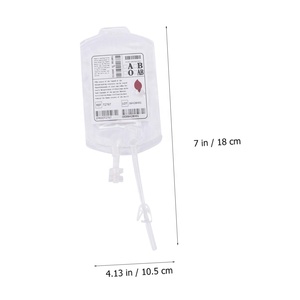
Food-grade PVC drinking pouches and novelty props custom manufactured under strict material safety and leak-proof sealing standards.
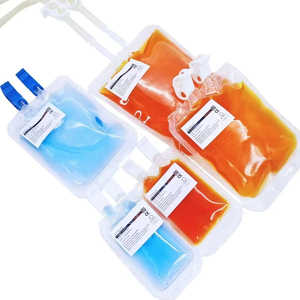
Integrated diversion pouch design with sterile vacuum tube sampling port to mitigate skin flora contamination during collection.
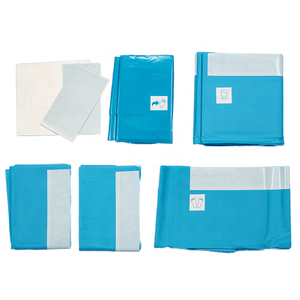
High-clarity transfer bags (150ml to 2000ml) for sterile pooling, component washing, and aliquoting in blood processing centers.
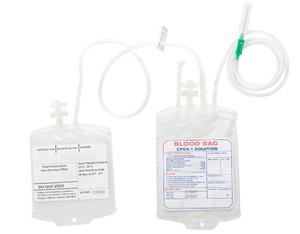
Advanced blood bag system with SAGM additive solution expanding erythrocyte viable storage lifespan up to 42 days at 2-6°C.
In modern transfusion medicine, disposable medical blood bag systems are far more than passive storage containers. They are highly specialized biological containment systems designed to preserve the viability, enzymatic activity, and morphological integrity of cellular blood components while minimizing biochemical degradation. As a leading CE certified blood bag factory & supplier, our manufacturing paradigms align strictly with international quality frameworks including EN ISO 3826 (Plastics containers for human blood and blood components) and ISO 13485.
The transition from glass bottles to flexible plasticized PVC (Polyvinyl Chloride) containers revolutionised blood banking by enabling closed-system blood collection, component separation via differential centrifugation, and extended preservation. Modern double, triple, and quadruple blood bag configurations allow blood centers to separate whole blood into Packed Red Blood Cells (PRBC), Platelet Concentrates (PC), and Fresh Frozen Plasma (FFP) without risking microbial ingress.
The efficacy of a blood collection bag relies heavily on the biochemical balance of its pre-filled sterile anticoagulant and nutrient preservation solutions. Standard single-use collection systems utilize validated formulations tailored to specific clinical storage targets:
| System Configuration | Primary Container Volume | Satellite Containers | Anticoagulant / Additive | Target Clinical Component | Storage Lifespan |
|---|---|---|---|---|---|
| Single Blood Bag | 250ml / 350ml / 450ml / 500ml | None | CPD / CPDA-1 | Whole Blood Transfusion | 21–35 Days (2–6°C) |
| Double Blood Bag | 350ml / 450ml | 1 Transfer Bag (150ml-300ml) | CPDA-1 or CPD + SAGM | PRBC + Fresh Plasma | 35–42 Days (PRBC) |
| Triple Blood Bag | 350ml / 450ml | 2 Transfer Bags | CPD + SAGM / AS-1 | PRBC + FFP + Platelet Concentrate | 5 Days (Platelets at 20-24°C) |
| Quadruple Blood Bag | 450ml / 500ml | 3 Satellite Bags + Filter | CPD + SAGM + Leukoreduction Filter | Leukoreduced PRBC + FFP + Platelets | 42 Days (PRBC, Leukoreduced) |
Operating as an elite medical disposable manufacturer, our integrated industrial footprint combines advanced polymer compounding, ultra-precision injection molding, automated radio-frequency (RF) welding, and in-house sterilization plants. Drawing upon over three decades of engineering expertise, our facilities adhere to the highest global standard for single-use medical devices.
Assembly, automatic tube printing, liquid filling, and pouch sealing take place inside controlled ISO Class 7 environment cleanrooms to maintain minimal bioburden levels prior to final sterilization.
In-house captive Ethylene Oxide (ETO) sterilizer chambers operate on fully automated computer-controlled cycles. Residual levels are meticulously audited to ensure compliance with ISO 10993-7.
Comprehensive batch testing includes tensile strength, weld seam burst pressure, needle point siliconization friction, non-pyrogenicity assays, bioburden testing, and extractables monitoring.
We provide full technical documentation dossiers (STED format), ISO 13485 certificates, CE certificates under EU MDR, and Free Sale Certificates (FSC) to simplify local health authority registration.
Custom pouch artwork, multi-language IFUs, specialized tubing lengths, custom needle guards, and barcoded UDI labels tailored for pharmaceutical brand owners and national tenders.
From medical-grade PVC resin compounding to internal toolmaking for injection molded break-away valves and spikes, eliminating reliance on third-party sub-component suppliers.
The global blood management sector is experiencing a paradigm shift driven by stringent patient safety requirements, automation in regional blood processing hubs, and rising environmental regulations regarding medical waste management. Sourcing managers and procurement directors must evaluate future-proof features when finalizing supply contracts with a CE certified blood bag factory & supplier.
Leukocytes (white blood cells) remaining in stored packed red cells and platelets are the primary vectors for Febrile Non-Hemolytic Transfusion Reactions (FNHTR), Human Leukocyte Antigen (HLA) alloimmunization, and Cytomegalovirus (CMV) transmission. Modern blood bag systems are increasingly designed with inline polyester or polyurethane micro-filtration membranes. In-line leukoreduction filters remove >99.99% ($4-log_{10}$ reduction) of leukocytes immediately post-collection, preserving red cell membrane stability and significantly improving clinical post-transfusion safety profiles.
To mitigate emerging viral threats and bacterial contamination in donor units, blood centers are rapidly adopting Pathogen Reduction Technologies (PRT) utilizing photochemical treatments (such as riboflavin or amotosalen activated by ultraviolet light). Emerging blood bag designs incorporate high UV-A and UV-B transparent fluoropolymer or polyolefin film windows that permit uniform photochemical irradiation of the blood container without releasing toxic degradants or compromising container integrity.
Manual barcode scanning during cold chain distribution is prone to human error and data gaps. The integration of passive Ultra-High Frequency (UHF) RFID chips directly into blood bag labels enables real-time inventory tracking, contactless temperature monitoring, automated expiry auditing, and seamless chain-of-custody verification from donor arm to recipient bedside.
Incineration of conventional PVC medical waste generates corrosive hydrochloric acid gas and dioxins. Global healthcare systems are aggressively testing non-halogenated polymer matrices such as Polypropylene (PP), Ethylene-Vinyl Acetate (EVA), and Thermoplastic Elastomers (TPE). These alternative films yield clean combustion byproducts (water and carbon dioxide) while offering superior flexibility and ultra-low temperature resistance for cryogenic stem cell and plasma storage down to -80°C.
Key technical insights compiled for hospital purchasing officers, distributor tender managers, and medical device importers.
Our sterile pre-filled blood collection bags have an un-opened shelf life of 24 to 36 months when stored in their original protective aluminum foil overwrap. Bags should be kept in a clean, dry, well-ventilated warehouse environment at temperatures between 5°C and 35°C, away from direct sunlight and corrosive chemical vapors.
The integrated sample diversion pouch isolates the initial 10-20ml of blood drawn from the donor. This initial aliquot contains any epidermal skin plugs or surface bacteria dislodged during venipuncture, diverting them away from the main collection container. Once filled, the pouch allows vacuum tube sampling for serological testing. The automatic needle safety shield slides over the donor needle upon withdrawal, permanently locking it to prevent accidental needle-stick injuries to healthcare personnel.
Standard catalogue SKUs have an MOQ starting at 5,000 units. For custom OEM or private-label production—including custom brand logo printing, specific tube lengths, private inner pouches, and custom box branding—the typical minimum order requirement is 20,000 units per configuration, corresponding to one full sterile ETO sterilizer batch run.
We provide a complete regulatory compliance package including ISO 13485:2016 Quality Management System certification, CE Certificate under EU Regulation 2017/745 (MDR), Biocompatibility Test Reports (ISO 10993), Ethylene Oxide Sterilization Validation Summaries (ISO 11135), Stability Data, and notarized/apostilled Free Sale Certificates (FSC) to expedite registration with local Ministries of Health.
All container seam welds are formed using micro-processor controlled High-Frequency (RF) dielectric welding equipment. This molecularly fuses the PVC sheets into a single homogenous matrix. Every lot undergoes destructive burst testing exceeding 5 bar internal pressure, as well as high-speed spin cycle testing up to 5,000 x g in refrigerated centrifuges to guarantee total seal integrity.
Contact our senior technical export desk today to request product samples, engineering drawings, or factory-direct pricing for your government tender and hospital distribution contracts.