Sales: +91 9099 928 652 [email protected] Mon – Sat : 10:00 AM – 07:00 PM (IST)
0%

Choosing a China-based manufacturer for a Wound Drainage System requires more than comparing prices or catalog photos. These devices support fluid removal after surgery, so design details can affect handling, visibility, and clinician workflow. A clear collection chamber, secure connectors, and legible volume markings are practical features worth examining. Small details matter.

The phrase “top manufacturer” can mean different things to different buyers. Some prioritize production capacity; others need flexible configurations, responsive communication, or experience with particular product types. This guide explores how to assess Chinese suppliers without treating a ranking as a guarantee of quality. A polished website alone is not enough.

Look for clear product specifications, traceable quality processes, and relevant technical documentation. Ask how materials, packaging, and assembly are controlled, and whether the supplier can explain its testing approach. Requesting samples may help teams inspect connectors, chamber graduations, and ease of use, though sample review cannot replace a full quality assessment. Not always.

It is also worth checking how a manufacturer handles design changes, production consistency, and post-sale questions. Requirements differ by destination market and intended use, so buyers should verify applicable expectations with qualified regulatory and clinical professionals. This takes time. Yet careful evaluation can make supplier discussions more useful and help narrow the field. The strongest choice is not necessarily the biggest factory; it is the supplier whose capabilities, evidence, and communication fit the buyer’s needs. Even then, no checklist removes every uncertainty. That deserves honest consideration.
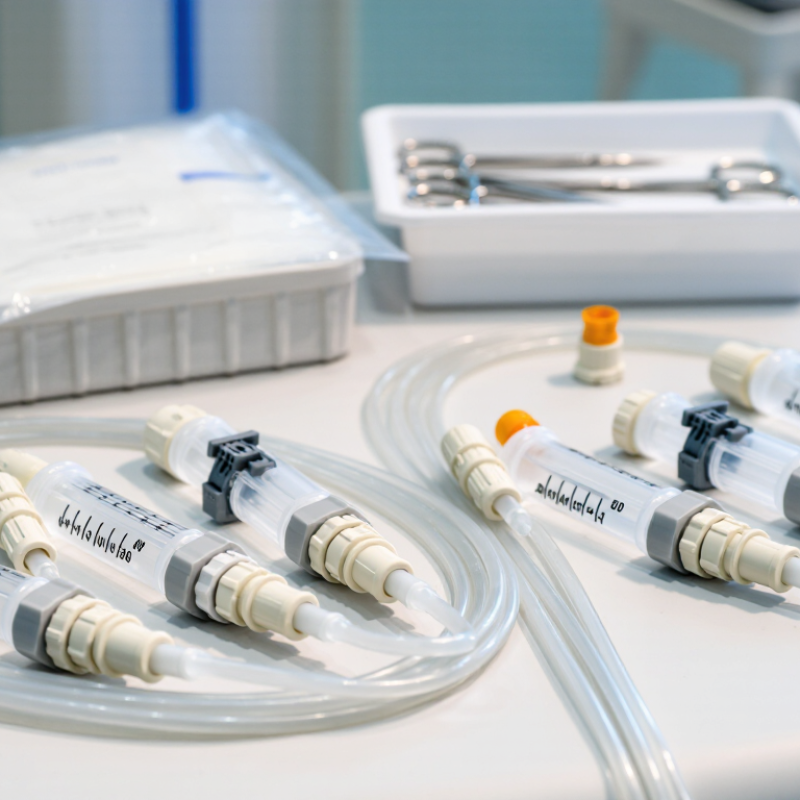
China Top Wound Drainage System Manufacturers?

Understanding Wound Drainage Systems and Their Clinical Uses

Understanding Wound Drainage Systems and Their Clinical Uses

Wound drainage systems remove blood, serous fluid, or other collected material from a surgical site or wound. By limiting fluid buildup, they can help clinicians assess healing and reduce pressure around the affected tissue. Some systems use gentle suction from a compressed reservoir; others rely on gravity and a collection bag. The choice depends on the procedure, wound location, and expected drainage. Small details matter.

After surgery, a clinician may place a drain near the operative area to collect fluid during early recovery. The amount, color, and consistency of drainage can offer useful information, but they are only part of a broader assessment. Staff check connections, secure tubing, and record output at set intervals. Patients may also be taught how to keep the collection device below the wound and avoid pulling the tubing. A drain is not a guarantee against complications, and it can cause discomfort or become blocked. Practice varies, too. Careful observation and timely communication with the treating team remain essential.

China Top Wound Drainage System Manufacturers? — Understanding Wound Drainage Systems and Their Clinical Uses

Typical nominal reservoir capacities in closed-suction drainage designs

Closed-suction drains collect fluid in a reservoir to help prevent fluid buildup after surgery. Small bulb reservoirs are commonly around 100 mL; spring-style reservoirs are available in sizes around 400–600 mL. These are representative capacities, not universal specifications—actual capacity depends on the device and clinical use.

Common Types of Wound Drainage Systems Manufactured in China

Common wound drainage systems manufactured in China include closed-suction drains, passive drains, and chest drainage units. Closed-suction models use perforated tubing connected to a compressed bulb or spring reservoir. They suit controlled fluid collection after surgery. Passive designs, such as flat or corrugated drains, rely on gravity or capillary action and need suitable dressings.

Small details matter. Tube flexibility, reservoir graduations, connector fit, and secure caps affect handling at the bedside.

Some factories also make chest drainage units, but these are intended for pleural drainage, not interchangeable with ordinary wound drains.

The World Health Organization’s 2016 Global Guidelines for the Prevention of Surgical Site Infection report that about 11% of patients undergoing surgery in low- and middle-income countries acquire an infection.

That figure describes infection burden; it does not show that a particular drain prevents infection. Buyers and clinicians should check intended use, drainage capacity, tubing dimensions, and the clarity of instructions.

Catalog descriptions can be vague, and a listed material alone does not tell you how a system performs during movement or prolonged use. Verify the product’s technical documentation and test it against the actual clinical workflow.

How Chinese Manufacturers Design and Produce Wound Drainage Systems

China Top Wound Drainage System Manufacturers?
How Chinese Manufacturers Design and Produce Wound Drainage Systems

Chinese manufacturers typically begin with the clinical task: collecting fluid while maintaining a controlled, closed pathway. Designers specify the drain’s shape, tube length, connector fit, and reservoir capacity. They also assess whether tubing kinks when bent and whether the reservoir markings remain readable under bright ward lights. Small details matter. WHO’s 2016 Global Guidelines for the Prevention of Surgical Site Infection report that surgical site infections affect up to 11% of patients undergoing surgery in low- and middle-income countries. That figure supports careful infection-control design, but it is not a measure of any product’s performance.

Production translates those design choices into repeatable checks. Teams inspect incoming polymers, mold components, assemble tubing and collection chambers, and test for leakage and vacuum consistency. Sterilization and packaging processes also require validation; a sealed pouch is not proof that the whole process is reliable. Traceability records help link materials, production batches, and test results. Yet factory checks cannot fully reproduce every clinical setting. That limitation deserves attention, not gloss.

Tips: Look for clear capacity markings, secure connectors, and tubing that resists kinking. Ask how leak testing, sterilization validation, and batch traceability are documented. A clean-looking prototype is only a start.

China Top Wound Drainage System Manufacturers? - How Chinese Manufacturers Design and Produce Wound Drainage Systems
Dimension Typical Design or Manufacturing Practice Relevant Verification or Consideration
Common product configurations Closed-suction systems commonly combine a perforated drain, connecting tubing, and a collection reservoir. Reservoirs may use a compressible bulb or an evacuable chamber, depending on the design. Confirm the intended drainage method, reservoir capacity, connection compatibility, and instructions for use for each model.
Drain and tubing materials Medical-grade silicone and PVC are used in different drain and tubing designs. Material selection affects flexibility, handling, kink resistance, and compatibility with the intended sterilization process. Material suitability and biological safety should be assessed for the finished device and its intended tissue contact, including under ISO 10993 principles.
Reservoir and connector materials Reservoirs and connectors may be made from polymers such as polypropylene or polycarbonate, depending on the product design. Components are designed to connect securely and maintain a closed fluid pathway. Assess connection security, leakage, usability, and performance after sterilization and during the stated shelf life.
Drain design Drain options can vary in material, length, diameter, and perforation pattern. Side holes or other drainage openings are positioned according to the device design and intended clinical use. Dimensions and performance specifications are model-specific; they should be confirmed in controlled product drawings and technical documentation.
Design controls Manufacturers typically translate intended use and user requirements into design inputs, drawings, component specifications, and acceptance criteria, then verify and validate the resulting design. ISO 13485 provides requirements for medical-device quality management systems. Certification status and scope should be checked directly for the relevant manufacturing site and product.
Component production and assembly Production may include extrusion of tubing, molding of polymer components, forming or preparation of drains, and controlled assembly. The exact process depends on the device construction. Process controls can include dimensional checks, visual inspection, assembly checks, and documented control of production equipment and materials.
Functional testing Finished systems can be evaluated for leakage, connection integrity, flow through the drain and tubing, and reservoir function, as applicable to the product design. Test methods and acceptance limits should be defined for the specific device and supported by documented results; they are not universal across all models.
Sterilization Ethylene oxide is commonly used for heat-sensitive, packaged medical devices; other validated methods may be suitable for particular materials and designs. Ethylene oxide sterilization is addressed by ISO 11135. Radiation sterilization is addressed by ISO 11137. The selected process must be validated for the product and packaging.
Sterile barrier packaging Packaging is designed to maintain sterility until the point of use and to allow aseptic presentation. Materials and seals must be compatible with the selected sterilization process. ISO 11607 covers packaging for terminally sterilized medical devices. Seal integrity, packaging performance, and shelf-life claims require appropriate validation.
Labeling and traceability Product labeling typically identifies the device, sterile status, single-use status where applicable, lot or batch information, and storage or use instructions. Labeling and regulatory documentation depend on the destination market. For China, relevant NMPA requirements apply; export requirements vary by jurisdiction.
Supplier evaluation When comparing manufacturers, review the product specification, manufacturing-site capabilities, quality-system scope, sterilization arrangements, and technical documentation rather than relying on a general ranking. Request current certificates and product-specific evidence, and verify their validity, scope, issuing body, and applicability to the device being sourced.
Specification note Materials, dimensions, reservoir capacities, sterilization methods, and test criteria vary by product and manufacturer. The details above describe common design and production considerations, not specifications for every wound drainage system.

Quality Standards and Regulations for Chinese Manufacturers

China’s wound drainage system manufacturers should demonstrate more than a certificate. Buyers can review the quality management system, device classification, production controls, and traceability records. In China, registration and filing requirements depend on the device’s risk classification. Ask for the applicable NMPA documentation and confirm that its product scope matches the drainage system being purchased. Check batch records, sterilization validation, packaging integrity, and complaint-handling procedures. Small details matter.

The ISO Survey 2022 recorded 33,625 ISO 13485 certificates across 132 countries and economies. That industry-wide figure shows the standard’s broad adoption, but it does not prove that any individual product is safe or compliant. Request a current certificate and verify its issuing body, site, and scope. For export markets, manufacturers may also need to meet destination-specific requirements, such as the EU Medical Device Regulation or US FDA rules. Keep the evidence current. A certificate can be valid while a particular product or process falls outside its scope; this is easy to overlook.

How to Evaluate and Select a Chinese Wound Drainage Supplier

When evaluating a Chinese wound drainage supplier, look beyond product photos and price lists. Request the product specifications, intended use, material details, and sterilization information. Check that tubing, connectors, reservoirs, and clamps match your clinical requirements. Ask how the supplier controls production changes and traces each batch. Clear answers should be supported by current records, not just assurances.

Review quality procedures, inspection criteria, and packaging integrity. If possible, assess samples for secure connections, readable measurement markings, and reliable drainage under expected use conditions. Small details matter. Ask plainly. A video call or facility audit can help you understand production controls, but neither replaces document review. Confirm lead times, minimum order quantities, complaint handling, and how defects are investigated. Check that export documents and product labels are complete for your destination market.

A sample review can still miss problems that appear during storage or routine handling. Request shelf-life evidence and packaging validation, then clarify how the supplier manages damaged shipments. Compare suppliers using the same criteria, and record any unanswered questions. A low quote may reflect different specifications, so compare like with like. Supplier selection is not a one-time check; keep reviewing performance after orders begin.

FAQS

What types of wound drainage systems are commonly available?

Common types include closed-suction drains, passive drains, and chest drainage units. Closed-suction models collect fluid in a compressed bulb or spring reservoir. Passive drains rely on gravity or capillary action. Small details matter.

Can a chest drainage unit replace an ordinary wound drain?

No. Chest drainage units are intended for pleural drainage, not routine wound drainage. Check the device’s intended use before selection.

Which product details should buyers check?

Review tubing flexibility and dimensions, connector fit, reservoir markings, clamps, and cap security. Check drainage capacity and instructions, too. A material name alone tells little about real-world performance.

What quality documents should a supplier provide?

Request current quality-system documents, product specifications, traceability records, and applicable registration or filing evidence. Confirm that the documents cover the product and production site. Certificates can have limited scope.

How can a sample be assessed?

Check connection security, readable graduations, packaging integrity, and drainage under expected use conditions. Ask for sterilization and shelf-life evidence. A sample may still miss storage-related problems.

What should buyers ask about production and defects?

Ask how production changes are controlled and batches are traced. Review inspection criteria, complaint handling, and defect investigations. Ask plainly. Keep records of unclear answers.

How can suppliers be compared fairly?

Use the same specifications and evaluation criteria for each supplier. Compare tubing, reservoirs, packaging, lead times, and order minimums. A low quote may reflect different specifications.

Does a drain prevent surgical infections?

The article cites an infection rate of about 11% among surgical patients in low- and middle-income countries. That figure describes infection burden; it does not prove a particular drain prevents infection. I may find a neat statistic reassuring, but it cannot replace product-specific evidence.

Conclusion

This article explores how a Wound Drainage System supports the removal of fluid from a surgical or injured area and why choosing an appropriate system matters for patient care. It introduces common options made in China, such as closed suction drains, bulb reservoirs, and collection systems, and explains how their components and intended clinical uses can differ.

The article also outlines how manufacturers approach product design, material selection, assembly, and inspection, along with the quality standards and regulatory requirements that may apply to medical devices. For buyers, it offers practical considerations for assessing a Chinese supplier, including manufacturing capabilities, documentation, quality controls, product consistency, communication, and after-sales support. These points help readers compare suppliers thoughtfully and identify products suited to their clinical and procurement needs.


Seraphina

Seraphina

Seraphina is a highly skilled marketing professional dedicated to helping businesses understand products, markets, and customers with clarity and confidence. With extensive knowledge of the company’s solutions, she transforms complex product features into practical insights that support informed......