Choosing the right Urine Collection Bag involves more than comparing size or price. Patients may need different designs during hospital recovery, long-term care, travel, or nighttime drainage. The most common options include leg bags, bedside drainage bags, pediatric bags, and systems designed for specific catheter types. Each model supports a different routine.
A leg bag is compact and usually attaches to the thigh or calf. It can fit beneath loose clothing and hold urine during daytime movement. A bedside bag offers greater capacity, often with a drainage tap and an anti-reflux valve. This design reduces frequent emptying during sleep. Pediatric versions are smaller and shaped for a child’s comfort. Some products include soft straps, kink-resistant tubing, or graduated markings for measurement.
Small details matter. A secure connection can prevent leaks. A clear chamber helps caregivers monitor color and volume. A smooth outlet may make emptying cleaner and easier. Materials also affect comfort, skin tolerance, and odor control. However, no single bag suits everyone. A convenient leg bag may feel restrictive, while a larger bedside bag may limit mobility. That trade-off deserves honest consideration.
Clinical guidance remains important. Nurses, continence specialists, and other qualified professionals can assess catheter compatibility, drainage needs, skin condition, and infection-prevention practices. Users should follow the product instructions and seek advice when pain, fever, blood, unusual odor, or reduced drainage appears. The best choice is practical, safe, and reassessed when the patient’s condition changes.
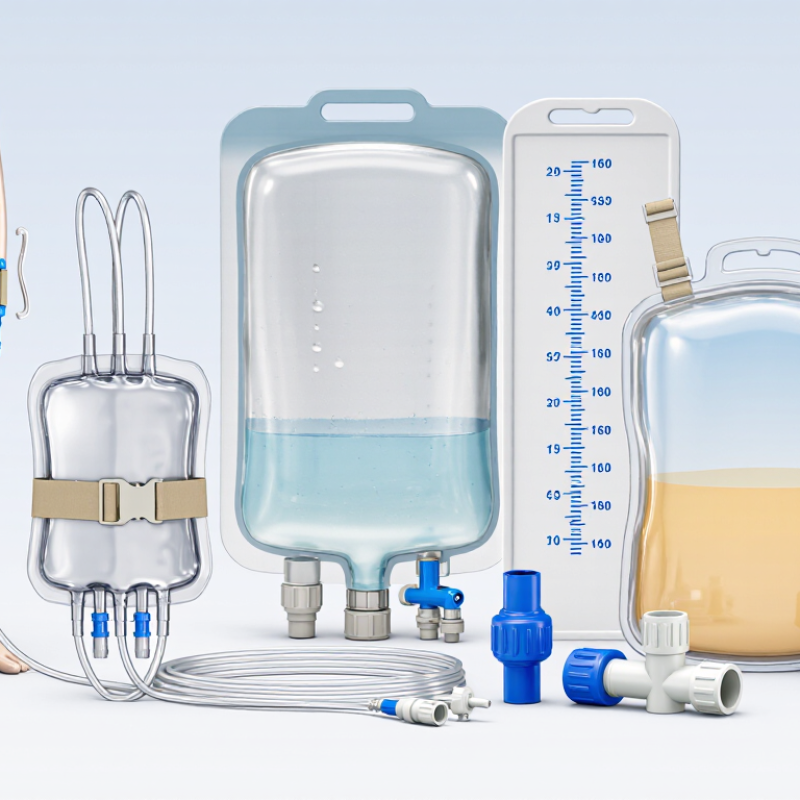
Urinary collection bags are designed to receive, measure, and safely drain urine after a catheter or urinary diversion. Their basic structure is simple: flexible tubing, a sealed reservoir, an anti-reflux valve, a sampling port, and a bottom outlet. The closed system helps reduce handling and contamination. The Centers for Disease Control and Prevention reports that urinary catheters are used in approximately 15–25% of hospitalized patients, making reliable collection design clinically important.
The most common types are bedside drainage bags and smaller leg bags. Bedside bags usually hold around 2,000 milliliters and hang below bladder level on a bed frame. This position supports gravity drainage. Leg bags often hold 350–750 milliliters and attach with soft straps beneath clothing. They support mobility, but limited capacity requires regular emptying. Some bags include graduated markings, which help nurses record output more consistently. Small details matter.
The Agency for Healthcare Research and Quality recommends maintaining a closed drainage system and keeping the bag below bladder level. In daily care, staff should check for kinks, leaks, cloudy urine, and tension on the catheter. A poorly positioned bag can pull painfully or allow backflow. The design is useful, but not perfect. Markings may be hard to read, straps can irritate skin, and tubing sometimes catches on furniture. Better designs should balance capacity, visibility, comfort, and infection-control needs.
Leg bags support daytime mobility by collecting urine in a compact container worn beneath clothing. They usually connect to an indwelling or intermittent catheter through flexible tubing. The design should allow walking, sitting, and gentle movement without pulling the catheter.
A suitable leg bag should match the user’s prescribed capacity and daily routine. Smaller bags may feel lighter, but they require more frequent emptying. Larger bags offer longer use between emptying, yet they can become heavier. Adjustable straps should hold the bag firmly without leaving deep marks. Tubing needs a smooth route along the leg, with no sharp bends or loose loops. Small details matter.
Discreet use depends on clothing, placement, and movement. A bag may remain hidden under loose trousers or a long skirt, but it is not invisible in every situation. Empty it before it becomes full, following guidance from a qualified healthcare professional. Clean hands before and after handling the system. Check the skin for redness, soreness, swelling, or pressure marks each day. Report fever, unusual pain, cloudy urine, blood, leakage, or a sudden drop in drainage promptly.
Some users find the straps comfortable at first, then notice slipping during longer walks. That feedback deserves attention, not dismissal. Adjustments may help, but persistent discomfort can indicate an unsuitable size or placement. A nurse or continence specialist can assess the fit and explain safe care for the specific catheter system.
Leg bags are available in several standard capacity options for daytime mobility and discreet use. Smaller bags may provide a lower profile, while larger bags can reduce the frequency of emptying. Actual capacity, design, and recommended wear time vary by product and clinical guidance.
Bedside drainage bags are designed for overnight urine collection, especially when a person cannot walk safely to the bathroom. They usually hold more fluid than compact leg bags. A graduated chamber helps caregivers estimate output, while an anti-reflux valve can reduce backflow toward the bladder. A firm drainage tap makes morning emptying easier.
Place the bag below bladder level. Never rest it on the floor. Secure it to the bed frame with its hanger, and keep the tubing gently curved without kinks. The connection should remain closed and clean. Before sleep, check that the bag is not already full. During the night, inspect the tubing if urine stops flowing. A twisted line may look like a medical problem when it is only poorly positioned.
Wash hands before and after handling the system. Follow the instructions provided by a qualified healthcare professional, because cleaning methods differ between products. Empty the bag into a clean container when needed, avoiding contact between the outlet and any surface. Cloudy urine, strong discomfort, fever, new bleeding, or sudden leakage deserves prompt medical advice. Even experienced caregivers miss small issues when tired. I have found that a quick bedside check prevents more trouble than hurried cleaning in the morning.
What Are the Top Types of Urine Collection Bags?
Specialized Bags for Children and Clinical Applications
Urine collection bags vary by age, mobility, and medical need. Pediatric adhesive bags are small, soft, and designed for short-term sample collection. They usually include a gentle opening that fits around the child’s genital area. Correct placement matters. A loose seal may cause leakage or contaminate the sample. Some children also react to adhesive materials, so clinical staff should check the skin regularly.
For infants and young children, collection bags can support non-invasive testing when toilet use is not possible. However, they may not always provide the cleanest sample. Healthcare professionals may choose another collection method when accuracy is critical. Bedside drainage bags suit patients with urinary catheters and hold larger volumes. Leg bags are more compact and support daytime movement. Their tubing should remain free from bends, pressure, and unnecessary pulling.
Tips: Wash hands before handling the bag. Keep the container below bladder level. Empty it before it becomes heavy. Check for cloudy urine, unusual odor, blood, fever, or new discomfort, and contact a healthcare professional promptly. Avoid opening a sealed sample bag unless instructed. Children need reassurance, not rushed handling. In practice, the “best” bag is not always the largest or most convenient. Fit, skin condition, mobility, and clinical purpose should guide the choice. Mistakes happen, especially during nighttime care, so clear instructions and regular checks remain important.
| Urine Bag Type | Typical Capacity | Primary Users or Applications | Key Design Features | Main Advantages | Important Considerations |
|---|---|---|---|---|---|
| Pediatric Urine Collection Bag | Approximately 50–100 mL | Infants and young children who are not toilet trained; noninvasive urine specimen collection | Small adhesive pouch with a soft skin-contact area and an opening designed for the perineal region | Noninvasive, lightweight, and useful when a child cannot provide a clean-catch sample | Adhesive application requires careful skin preparation. Results may be affected by contamination, so a positive culture may require confirmation with a more sterile collection method. |
| Pediatric Urine Meter or Drainage Bag | Approximately 100–500 mL | Hospitalized children requiring monitored urine output or temporary drainage | Small-volume graduated chamber or bag, drainage outlet, and tubing connection | Allows measurement of smaller urine volumes and reduces the risk of overfilling a standard adult bag | Must be positioned below bladder level and checked regularly to prevent backflow, kinking, or accidental pulling. |
| Leg Bag | Commonly 350–750 mL | Ambulatory adults with an indwelling urinary catheter or intermittent catheterization routine | Compact bag with fabric straps or a securement system, inlet tubing, and bottom drain valve | Discreet, portable, and compatible with daily mobility under clinical guidance | Needs secure attachment without excessive tightness. The bag should remain below bladder level, and tubing should be kept free of bends. |
| Bedside Drainage Bag | Commonly 2,000 mL | Patients who are bedbound, hospitalized, or receiving overnight urinary drainage | Large-volume bag with a hanger, anti-reflux feature in some designs, graduated markings, and a drain valve | Provides extended collection capacity and reduces the frequency of emptying | Should be kept below the bladder and off the floor. Regular emptying and aseptic handling help reduce contamination and infection risk. |
| Urometer or Hourly Urine Output Bag | Overall capacity often 2,000–2,600 mL; graduated measuring chamber commonly 400–500 mL | Critical care, postoperative monitoring, and situations requiring precise hourly urine output measurement | Separate calibrated chamber that permits small-volume measurement before drainage into the larger reservoir | Supports frequent and more accurate urine output assessment than reading a large reservoir alone | Requires correct leveling, clear visibility of graduations, and careful emptying technique. It is intended for clinical monitoring, not independent diagnosis. |
| Closed-System Urine Drainage Bag | Commonly 2,000 mL for bedside use; smaller versions may be used for mobility | Indwelling urinary catheter systems where maintaining a closed drainage pathway is important | Preconnected sterile tubing, sampling port, anti-reflux valve, and bottom drainage outlet | Helps limit unnecessary disconnections and supports infection-control practices | The closed system should not be opened unnecessarily. Any leakage, disconnection, obstruction, or damage should be assessed promptly by qualified healthcare personnel. |
| External Urine Collection Pouch | Varies by design; generally intended for short-term or intermittent collection | Selected patients with urinary leakage who do not require an indwelling catheter | Skin-contact pouch or external interface connected to a drainage container | May provide a noninvasive alternative to urethral catheterization for appropriate patients | Suitability depends on anatomy, skin condition, mobility, and continence status. It does not provide the same drainage pathway as an indwelling catheter. |
| Specimen Collection Container or Transfer Bag | Commonly 30–120 mL for specimens | Laboratory urine collection, routine urinalysis, and selected clinical tests | Clean or sterile container, secure lid, label area, and sometimes a transfer device | Supports identification, transport, and laboratory processing of a urine sample | Collection method, container type, labeling, storage, and transport time should follow the laboratory or healthcare facility’s instructions. |
Capacity ranges are typical examples and can vary by design and clinical setting. Selection should be based on the patient’s age, mobility, drainage requirements, skin condition, infection-control protocol, and instructions from a qualified healthcare professional.
Choosing a urine collection bag starts with the person’s routine, not the product category. Leg bags stay beneath clothing and support daytime mobility. Bedside bags hold more urine and reduce overnight emptying. Some systems connect to an indwelling catheter, while external collection devices may suit selected users. Each option has limits. A larger bag may feel safer, yet its weight can pull on tubing. A smaller bag is discreet, but it needs more frequent emptying.
Skin condition, hand strength, vision, bladder drainage plan, and caregiver support all matter. A clinician should confirm compatibility with the catheter and drainage system. Look for secure connectors, an anti-reflux feature, a readable capacity scale, and an easy-to-open outlet. The outlet should not touch the floor or toilet. Keep the bag below bladder level. Avoid sharp bends in the tubing. Empty it before it becomes heavy. Wash your hands before and after handling.
Comfort deserves equal attention. Straps that are too tight can leave marks, while loose straps may let the bag swing. Night use may require a stable bedside container and enough tubing for natural movement. Persistent leakage, fever, pelvic pain, cloudy urine, blood, or reduced drainage needs prompt medical advice. I would not call any bag universally best. A practical choice may still need adjustment after one ordinary day. The quiet details often decide whether a system works.
It receives, measures, and drains urine after catheter placement or urinary diversion. The system also limits handling.
Common parts include flexible tubing, a sealed reservoir, an anti-reflux valve, a sampling port, and a bottom outlet. Small details matter.
Bedside bags often hold about 2,000 milliliters and support overnight drainage. Leg bags usually hold 350–750 milliliters and support daytime movement beneath clothing. Capacity changes comfort.
Keep the bag below bladder level to support gravity drainage and reduce backflow risk. Do not place it on the floor. Tubing should remain straight.
Consider daily movement, skin condition, hand strength, vision, and caregiver support. A clinician should confirm compatibility with the catheter system. The largest bag is not always best.
Look for secure connectors, an anti-reflux feature, readable markings, and an easy-to-open outlet. The outlet should not touch the floor or toilet. Visibility helps, but markings can still be difficult to read.
Wash your hands before and after handling the bag. Check for kinks, leaks, unusual tension, cloudy urine, and reduced drainage. Empty the bag before it becomes heavy. Nighttime mistakes happen.
Pediatric adhesive bags support short-term urine collection when toilet use is not possible. Place the opening carefully around the genital area. A loose seal can leak or contaminate the sample. Check the skin often.
Contact a healthcare professional promptly for fever, pelvic pain, blood, cloudy urine, unusual odor, or new discomfort. Persistent leakage also needs attention. Do not ignore reduced drainage.
No bag is perfect. Straps may irritate skin, tubing can catch on furniture, and weight may cause pulling. A practical choice may still need adjustment after one ordinary day.
A Urine Collection Bag is a medical device designed to collect and safely contain urine when a person cannot use a toilet normally or needs continuous drainage. Most systems include a flexible bag, tubing, a secure connection, and a drainage outlet. Leg bags are compact and lightweight, making them suitable for daytime mobility and discreet use under clothing. They can support daily activities while allowing users to monitor output and empty the bag conveniently.
Bedside drainage bags usually have a larger capacity and are intended for overnight collection, reducing the need for frequent emptying. Specialized options may be adapted for children or specific clinical situations, with attention to comfort, fit, hygiene, and secure positioning. Choosing the right bag depends on capacity, intended use, mobility, skin sensitivity, connection compatibility, and ease of cleaning or disposal. Professional guidance can help ensure that the selected system meets individual health and care requirements safely.
