Choosing the right Nebulizer Mask is a practical decision, not a cosmetic one. A loose edge can leak mist toward the cheeks instead of the lungs. A stiff strap can leave red marks after a ten-minute treatment. These small details may affect comfort, cooperation, and treatment consistency.
The World Health Organization reports that asthma affected about 262 million people in 2019 and caused 455,000 deaths worldwide. Its reports also emphasize access to effective respiratory care and essential medicines. Meanwhile, the American Association for Respiratory Care’s aerosol-delivery guidance highlights the importance of correct device use, patient fit, and treatment technique. These findings support a careful approach to mask selection, especially for children, older adults, and patients with limited breathing control.
This guide introduces seven practical tips for choosing a suitable Nebulizer Mask. It considers size, seal, material, strap design, breathing comfort, cleaning, and compatibility with the nebulizer cup. A transparent mask can help caregivers watch condensation and facial movement. A softer rim may feel better, but it might not seal well on every face. There is no universal best option. Personal testing still matters.
Some choices remain imperfect. Product labels can sound reassuring while offering limited clinical detail. Users should follow clinician instructions, check the manufacturer’s specifications, and replace damaged components promptly. The goal is simple: a secure, comfortable interface that supports consistent aerosol therapy without creating unnecessary discomfort.
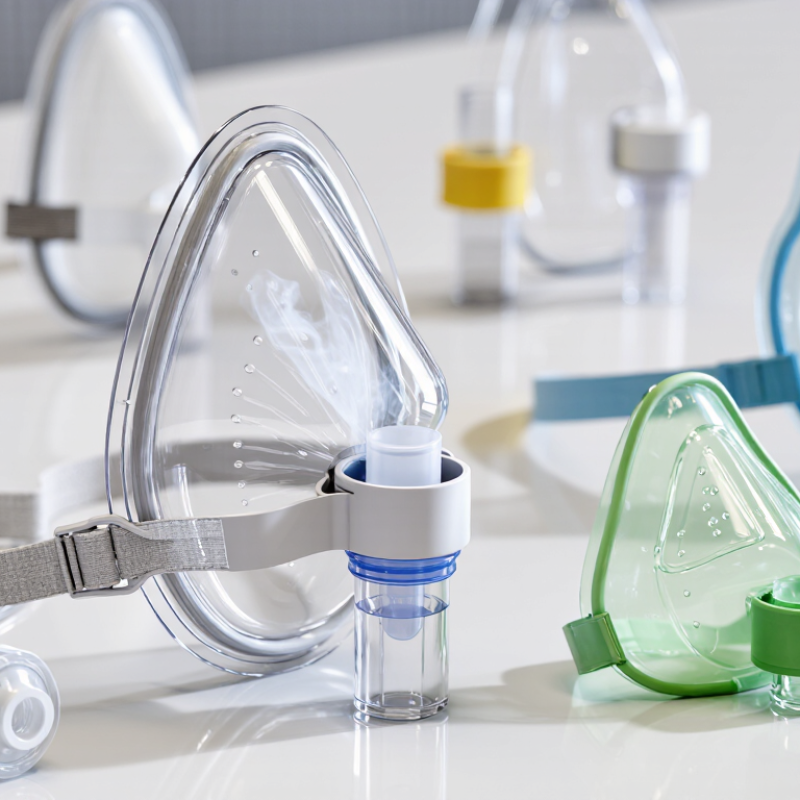
Choosing the right nebulizer mask starts with the patient’s face, not the package label. Measure the nose, mouth, and chin area carefully. A pediatric mask should sit comfortably without covering the eyes. An adult mask needs enough space for natural breathing. Fit matters more than appearance.
Hold the mask gently against the face and check the seal around the cheeks and nose. Air should not escape noticeably from the edges. Leakage can reduce the medicine reaching the airway and may irritate nearby eyes. Facial hair, loose skin, dental appliances, or an unusual nose shape can weaken the seal. Small adjustments often help. Sometimes, they do not.
Ask the patient to breathe normally during treatment. Watch for fogging, whistling, skin pressure, or visible mist escaping sideways. These details provide useful clues, but they are not perfect measurements. A very tight mask may leave red marks and cause resistance. A loose mask wastes aerosol. I have found that comfort is often overlooked when speed becomes the priority. Follow the device instructions and seek clinical guidance when the fit remains uncertain, especially for infants, older adults, or patients with facial injuries.
| Tip | What to Assess | Practical Guidance | Fit and Safety Check |
|---|---|---|---|
| 1. Match the mask to facial anatomy | Nose, mouth, cheeks, chin, facial contours, and the patient’s age or body size. | Select the size specified by the device instructions and intended for the patient population. The mask should cover the nose and mouth without pressing into the eyes or extending unnecessarily beyond the chin. | Check the complete perimeter for visible gaps while the patient is breathing normally. There is no single universal mask size for every patient. |
| 2. Prioritize a continuous seal | The mask cushion, nose bridge, cheek area, and lower edge around the chin. | Use a soft, flexible cushion when appropriate. Position the mask evenly rather than tightening it excessively, because over-tightening can create leaks, pressure marks, or discomfort. | A stable seal should be comfortable and should not require the patient or caregiver to hold the mask tightly against the face. |
| 3. Minimize aerosol leakage | Aerosol escaping around the mask, exhalation openings, or loose connections. | Keep the mask aligned with the nose and mouth, limit unnecessary movement, and confirm that the tubing and mask are firmly connected. Follow the nebulizer instructions for approved components. | Inspect for hissing, visible mist escaping at the edges, or repeated repositioning. Do not block designed exhalation vents. |
| 4. Consider a mouthpiece when suitable | The patient’s ability to hold a mouthpiece, close the lips around it, and follow breathing instructions. | A mouthpiece may reduce facial leakage when the patient can use it correctly. A mask may be more practical for infants, very young children, or patients unable to maintain a lip seal. | Use the option that allows calm, effective breathing and reliable medication delivery. Follow the clinician’s recommendation for the prescribed treatment. |
| 5. Account for breathing pattern and cooperation | Age, anxiety, crying, coughing, mouth breathing, and the ability to remain still. | Choose a comfortable, secure interface and allow the patient to breathe normally. Calm positioning can improve mask stability and reduce leakage caused by movement or crying. | If the patient becomes distressed or cannot maintain the interface, pause and seek clinical guidance rather than forcing a tight fit. |
| 6. Check comfort and skin condition | Redness, pressure marks, pain, skin irritation, and contact with the eyes. | Use the lightest secure strap tension and reposition the mask if pressure develops. Avoid placing the lower edge on the throat or allowing the upper edge to press on the eyes. | Inspect the skin after treatment, especially in infants, older adults, and patients with fragile or sensitive skin. Stop and obtain advice if irritation persists. |
| 7. Verify compatibility and maintenance | Connection size, nebulizer type, medication instructions, cleaning method, and replacement schedule. | Use only components approved in the nebulizer’s instructions. Clean, disinfect, dry, and replace parts according to the manufacturer’s instructions and local clinical policy. | Replace cracked, cloudy, stiff, damaged, or poorly fitting masks and tubing. Never share single-patient-use components unless they are specifically designed and reprocessed for reuse. |
Important: Mask selection should follow the nebulizer instructions and the guidance of a qualified healthcare professional. A well-fitting mask improves comfort and helps limit aerosol leakage, but it does not guarantee a specific delivered dose.
Choose a mask based on the patient’s nose, mouth, and chin area. It should fit comfortably without covering the eyes. An adult mask needs room for natural breathing.
Hold the mask gently against the face. Check the cheeks and nose for visible air leakage. A loose edge may waste aerosol. Check carefully.
Watch for sideward mist, whistling, or unusual fogging. These signs may indicate leakage or poor assembly. They are helpful clues, not perfect measurements.
Yes. Facial hair, loose skin, dental appliances, and unusual nose shapes can weaken the seal. Small adjustments may improve contact. Sometimes, they do not.
The mask should seal gently without pressing hard into the skin. A very tight mask may leave red marks or increase breathing resistance. Comfort deserves attention.
Many devices require 6–8 L/min, but follow the specific instructions. Too little flow may create weak mist and extend treatment time. Too much flow may increase noise, splashing, and facial cooling.
Do not immediately increase the flow. Check whether the cup is empty, tilted, or incorrectly connected. Keep the cup upright and inspect the tubing for kinks. Recheck first.
Seek guidance when the fit remains uncertain, especially for infants, older adults, or facial injuries. Also ask for review if treatment feels ineffective. The setup may look correct. That does not prove it works well.
Choosing the right Nebulizer Mask can improve comfort, medication delivery, and treatment efficiency. Begin by selecting a mask that matches the patient’s age, facial structure, and breathing needs, while ensuring a secure seal to reduce aerosol leakage. A properly fitted mask should feel comfortable without causing pressure or gaps. For lower-airway treatment, choose equipment designed to produce aerosol particles around 1–5 μm, as particle size can affect where medication is deposited in the respiratory tract.
When comparing nebulizer systems, consider output rate, treatment time, noise, and ease of use. Jet, ultrasonic, and mesh nebulizers may differ in performance and maintenance requirements. If a jet nebulizer is used, follow the manufacturer’s specified airflow, commonly 6–8 L/min when required. Also verify compliance with ISO 27427, understand cleaning and drying procedures, and follow all single-patient use instructions. Consistent maintenance and correct operation help support safe, reliable, and effective nebulizer therapy.